How is the transportation of goods carried out?
The transportation of goods can be carried out in various ways, depending on the nature of the shipments. If it is a full load, it can be carried out directly to the recipient, but if it is by groupage, the logistics route from Madrid to Barcelona becomes important due to shipping operations. transshipment and transit. For merchandise that needs to travel by air, the cargo flight option is essential, the closer it can be to its destination, the easier the freight transport will be. Land transport is the cheapest, but it can be the slowest, depending on factors such as traffic and the route taken. The most expensive option, but also the fastest, will be air transport.In recent years, the emergence of e-commerce has become especially relevant for the transportation of goods. It has revolutionized the way products are acquired in the Spanish market, forcing transport companies to adapt to new logistics processes. These changes have a notable influence on the Madrid-Barcelona route, as these are the two most populated urban nodes in our country. In addition, the demand for in-flight services in the logistics sector has grown to improve shipping efficiency. It is no coincidence that Barcelona is a key epicenter in this transformation, consolidating itself as a nerve center for transport and distribution.
.Rail freight transport between Madrid and Barcelona, although less developed than the road, is gaining importance as a sustainable alternative. The high-speed AVE has freight container train services. Travel time: 6-8 hours. CO2 emissions: 80% lower than the road. Cost: similar or 5-10% lower for full loads. Limitation: requires intermodal terminals at the origin and destination. For B2B clients with sustainability KPIs (CSRD), it is a strategic option.An efficient route on the logistics route between Madrid and Barcelona?
Many companies have invested in vehicles GNL (Liquefied Natural Gas) on the Madrid Barcelona logistics route, to improve energy and emissions efficiency. This has led to a greater amount of infrastructure being built between the two towns to supply GNL to vehicles.How long does it take to transport goods on the logistics route from Madrid to Barcelona?
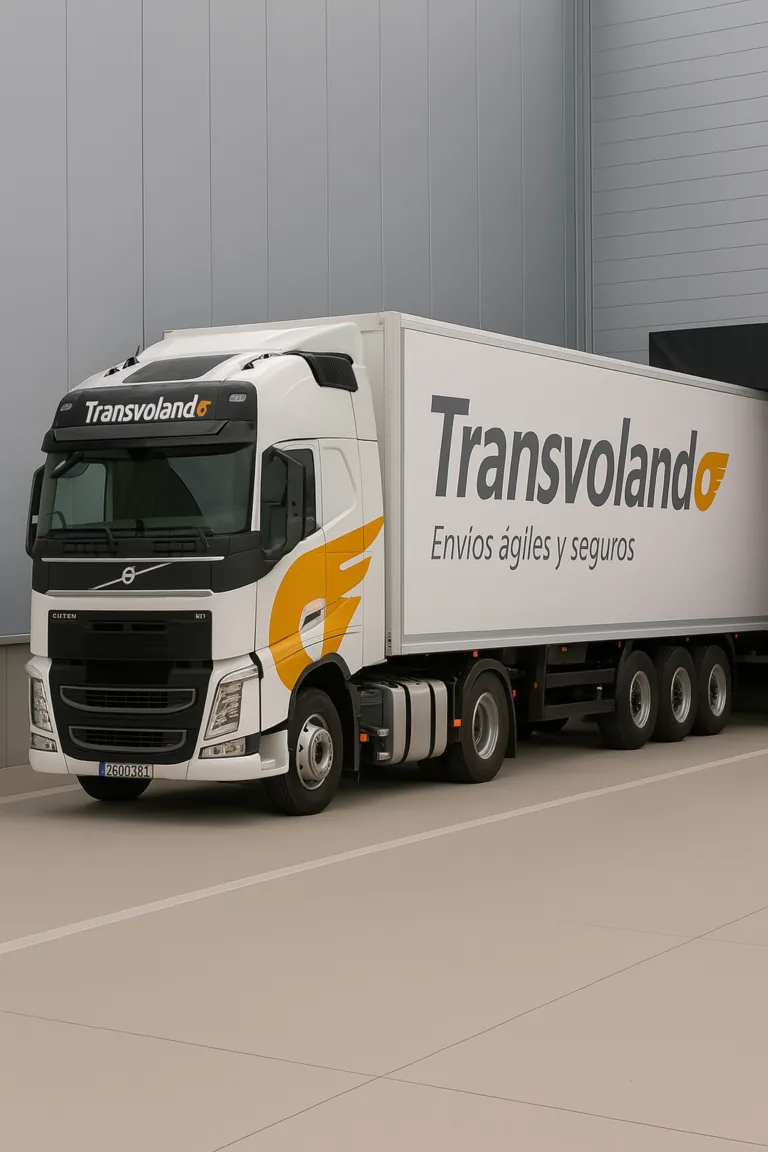
establish breaks and minimum and maximum hours that the driver must comply with on each route, in order to ensure their safety. From the freight transport company, in this case Transvolando, we provide our customers with the necessary services to satisfy their needs. transportation laws They establish breaks and maximum driving hours and availability for drivers. The collective agreement and Royal Decree 1561/1995 in Spain regulate working hours, breaks, supplementary hours, salaries and other essential aspects to guarantee fair conditions for the employees of the freight transport sector. mode in which we have contracted transport. We trust the trajectory and the long path traveled in this sector. Reliability, efficiency, professional service, friendly treatment, communication and high quality of services are the values that define our company. Transvolando is committed to its clients, offering them an exclusive and personalized service, which adapts to the needs of each one of them. viajar en tren.Freight transport by rail between Madrid and Barcelona is an efficient and sustainable alternative to road transport, with growing relevance in the modal mix. The infrastructure of the Mediterranean Corridor connects both cities with European hubs, allowing intermodal logistics that combine rail with road. Average travel time: 6-8 hours, compared to 8-10 hours by road. Reduction of CO2 emissions: up to 75% lower than full road transport. Cost: similar to road for shipments greater than 20 tons, with additional savings on tolls and fuel. The high-speed AVE lines also offer freight services for urgent shipments. The increase in container traffic between the inland terminals (Coslada, Abroñigal) and the port of Barcelona facilitates intermodal logistics with overseas markets. For B2B clients with strict ESG and decarbonization KPIs, rail transport between Madrid and Barcelona is a strategic option, especially under the new CSRD reporting framework. click.Frequently Asked Questions about Madrid-Barcelona Logistics
Why is the Madrid-Barcelona corridor the most important in Spain for B2B?
Data: the Madrid-Barcelona corridor accounts for 25% of Spanish GDP and moves 40% of intra-Spain cargo. B2B importance: 1) Connecting two main economic hubs. 2) EU market access via French border. 3) Radial distribution from Madrid nationwide. 4) Connection to Barcelona port (Mediterranean #1). 5) Frequent daily departures (multi-operator). For businesses with clients in both cities: essential strategic corridor.
What is the best Madrid-Barcelona route and how do I choose between AP-2, A-2 or rail?
Three alternatives: 1) AP-2 (toll motorway): 650 km, 6-7h without traffic, toll €60-80/way. 2) A-2 (national motorway): 620 km, 7-8h without traffic, no toll. 3) Intermodal rail: 60-72h, 30-40% cheaper but slower. For urgent FTL: AP-2 (toll worth it). For non-urgent FTL: A-2 saves. For groupage: similar (hub stops). Rail: ideal for volume above 5 containers/week.
How much does and how long does a Madrid-Barcelona shipment cost and take in 2026?
2026 rates: 1) Groupage 1 Euro pallet: €70-95, lead time 24-48h. 2) Full FTL: €480-650, direct 8-10h. 3) Same-day express: +50-80% vs standard, 8h before 6pm. 4) Refrigerated: +35-45% vs standard. Variables: fuel, weekday, urgency. For volume above 50 shipments/month: 20-30% discount with annual rate.
What seasonal peaks affect the Madrid-Barcelona corridor and how do I manage them?
Four predictable peaks: 1) Pre-Christmas (October-December): demand +25-40%. 2) Pre-August holidays: export peak before closing. 3) Harvest and agricultural campaign (September-November). 4) Black Friday and e-commerce campaigns. Proactive management: 1) Book capacity 60 days ahead. 2) Annual fixed rate covers peaks. 3) Reserved capacity with elasticity clause. 4) Plan B (second operator 20%). Businesses that improvise: spot rates 50-100% over standard.
What special considerations does delivery in Barcelona city vs metropolitan area have?
Five critical considerations: 1) Barcelona Rondas LEZ bans vehicles without DGT label. Use Euro 6 minimum. 2) Historic centre access restrictions (narrow streets) — use van. 3) Metropolitan industrial estates (Vallès, Baix Llobregat) — trailer accessible. 4) Barcelona port congestion peaks — before 2pm or after 4pm. 5) El Prat airport — mandatory cargo booking. Your agency must manage these variables.
Need a Full Truckload (FTL) service?
At Transvolando we manage your freight with efficiency and reliability. Personalised quote in under 2 hours.
View serviceRequest a quote