European Parliament and the Council of the EU for the decontamination of trucks.
This agreement represents a political consensus between two of the EU's key institutions, the European Parliament and the EU Council. This indicates strong political support for the truck decontamination agenda of the transporte terrestre and provides a clear legislative framework for the implementation of concrete measures.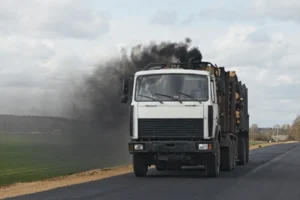
New goals to reduce emissions
An ambitious target is set to reduce CO2 emissions of heavy vehicles, such as trucks and buses. These goals include a reduction of 45% by 2030, 65% by 2035 and 90% by 2040 compared to 2019, demonstrating a continued commitment to long-term climate action. In addition to the established targets, a 15% reduction target has been maintained by 2025. This additional target reflects the urgency of addressing CO2 emissions in the short term and coincides with efforts to accelerate the transition to a low-carbon economy. This reflects the commitment of the European Union (EU) to the decontamination of the healthcare sector. road transport.According to the pact, an emissions reduction target of 7.5% for trailers and 10% for semi-trailers is established. partir de 2030.Scope of the regulation's validity
It has been agreed to extend the scope of the Regulation to include almost all heavy vehicles new with certified CO2 emissions. This extension ensures that a wider range of vehicles are subject to emissions reduction targets.Exemptions from meeting CO2 reduction targets have been established for certain specific cases. These exemptions will apply to:- Small manufacturers and vehicles used for mining, forestry and agricultural purposes.
- Vehicles intended for the armed forces and fire services.
- Vehicles intended for civil protection, public order and medical care.
Truck decontamination assessment provision
The Commission will conduct a review of the effectiveness and impact of Regulation modified in the mentioned targets in 2027. This review will provide an opportunity to evaluate progress towards the CO2 emissions reduction targets and determine if additional adjustments to achieve these objectives. Additionally, the role of a methodology to record heavy vehicles that run exclusively on CO2-neutral fuels. This would include assessing how emissions from vehicles using CO2-neutral fuels can be appropriately accounted for and recorded.Solicita presupuesto de nuestro servicio de transporte de mercancías
In our company, numerous shipments are successfully made every day, and our customers are completely grateful and satisfied with our team. If you need quality and seguridad to manage your company's shipments, Request a quote for our freight transportation service.We are waiting for you! Request your quote in less than 3 minutes at just one click.Frequently Asked Questions about EU Clean Trucks Agreement
What does the EU Historic Clean Trucks Agreement establish?
EU Regulation 2024/1610 requires manufacturers to cut CO2 emissions on new heavy vehicles: 45% by 2030, 65% by 2035, 90% by 2040 (versus 2019). It applies to trucks above 7.5t, urban buses and coaches. For businesses hiring transport: your agency will need to progressively renew the fleet, with knock-on rate effects (+8-12% on new vehicles).
How does this agreement affect transport costs for Spanish businesses?
5-10 year impact: 1) Heavy electric vehicles will cost 2-3× more than diesel until 2030. 2) MOVES III subsidies partially help (40-60% of the extra cost). 3) Charging infrastructure is still limited. 4) Businesses using an agency are partly insulated from the cost (diluted across clients). Tip: contract clause for review tied to regulatory developments, not just diesel.
What technologies will replace diesel in heavy transport and when will they go mainstream?
Four alternatives: 1) Battery electric (routes <300 km, urbano y regional). Mainstream 2028-2030. 2) Hidrógeno verde (rutas largas, gran volumen). Mainstream 2032-2035. 3) GNL/biometano (transición), ya disponible. 4) Biocombustibles HVO (drop-in, sin cambio de vehículo). El diésel convencional desaparecerá como nuevo vehículo en 2040 según la regulación, pero la flota existente seguirá rodando hasta 2050.
Can my business benefit from subsidies by hiring sustainable transport?
Yes, via two channels: 1) MOVES III plan subsidises electric/hydrogen vehicle purchase (does not apply to businesses that only hire transport). 2) Corporate tax reduction for sustainable investment (5-10% deduction) — if the agency certifies electric km. 3) Bonus in public tenders by using agencies with green fleets (growing criterion in public procurement). Request an annual certificate from your agency for CSRD reporting.
How do I measure the environmental impact of my supply chain for CSRD reporting?
Five steps: 1) Request kg CO2 per shipment from the agency (GLEC Framework standard). 2) Annual total by category (FTL, groupage, urgent). 3) Year-on-year comparison (target -5% annual). 4) Report Scope 3 transport in audited CSRD statement. 5) Define a 2030 reduction plan (-30% minimum recommended). Businesses without a CSRD plan face fines up to 5% turnover plus reputational damage. Start with an external audit (€5,000-15,000).
Need part-load / groupage?
Your pallets ride with other consignments. Save the full-lorry cost without missing your delivery date.