Growth of vehicle transport in Spain
Since 2015, we have noticed growth in the automobile sector in Spain; we can say that, per minute, 5.5 cars are manufactured in our country. Likewise, the transportation of machinery increases in its different versions: agricultural, large volume, gran volumen or for construction. According to a report published by the Automobile and Truck Association (Anfac), which deals with the Valuation of the Logística of Vehicles by road, the transport of vehicles in Spain has increased, which reflects an improvement in the automotive sector, and in 2016 an increase in the sale of new vehicles in our country began to be seen, with an increase of 11%. In addition, the factories managed to increase their production by 5.8%. This study collects information on the distribution of new vehicles produced in the different factories in Spain and reveals that the volume of new vehicles has been transported 3.9% more by road within our borders. And for this, more than 300,000 trucks have been required, with which the vehicles have been taken to their new locations. On the other hand, around 900,000 new vehicles have been transported internationally by road, which represents a drop of 3% compared to previous years, and this is due to the increase in maritime transport of new vehicles for international destinationsNow that you know about the current situation of road vehicle transport in Spain, do not hesitate to count on Transvolando.European panorama and new challenges in peninsular freight transport
Without a doubt, in Spain we still have some pending issues to resolve regarding land transport of goods. According to statistical data, in the rest of Europe, rail freight transport accounts for up to 15-18% of total land transport. Probably, factors such as the extensive railway infrastructure network are one of the greatest arguments to understand this data. For its part, road freight transport must take advantage of the boom it is experiencing and apply the latest advances in innovation and development. This way we can turn it into a more efficient and less polluting means of transportation. In short, neither medium is 100% good or 100% bad. The important thing, and what is really interesting, is to try to take advantage of the synergies that can be found between them. In fact, and as we pointed out before, land freight transport by train has a high intermodality characteristic. Precisely for this reason, a good option to cover large stages of the journey that then end with road transport to the final destination.Contact:+34 674 346 912info@transvolando.comAddress: C/ Empleo, 28 Nave 10 28906 – Getafe (Madrid, España) How to get there?Do you need anything else…?
Many times we need the support of something more than a word. If we can help or accompany you in this process of choosing our services, contact us and we will respond as soon as we put the brakes on!budget
If you are here it is because you need a freight transport service and we are sure that we can provide it!Ask us for a free quote en menos de 3 minutos a tan solo un click.Frequently Asked Questions about Vehicle Transport by Road
How are complete vehicles transported by road and what service types exist?
Three B2B modalities: 1) Closed covered trailer — premium or weather-sensitive vehicles, 8-10 unit capacity, +30-50% over open. 2) Open multi-place trailer — standard fleet, 6-9 units per truck. 3) Spot platform — 1-2 urgent vehicles. 4) Multimodal rail — large fleets (Madrid-Barcelona above 50 units). Dealerships + car rental businesses: open multi-place trailer most profitable (€5-15/km). Premium businesses: secured closed.
How much does it cost to transport a car by road in Spain and Europe?
Indicative rates 2026 (standard vehicle): 1) Madrid-Barcelona: €250-400 open trailer, €350-550 closed. 2) Madrid-Seville: €280-450. 3) Madrid-Bilbao: €300-450. 4) Spain-Germany (Frankfurt): €1,300-1,800. 5) Spain-France (Lyon): €850-1,150. Monthly volume above 10 units: 20-35% discount. Variables: weekday, urgency, season (harvest, summer hot). Request 3 quotes for benchmark.
What documentation does vehicle transport need for my business?
Mandatory B2B documentation: 1) Vehicle delivery document signed origin + destination (condition, mileage). 2) Circulation permit copy. 3) Current technical inspection card. 4) CMR (international transport). 5) Current all-risk insurance. 6) For fleets: framework contract carrier. Dealerships + fleet businesses: implement digital electronic signature system to speed processes. Logistics business must facilitate it.
What risks does vehicle transport have and how to protect my fleet?
Five main risks: 1) Damage during loading/unloading (scratches, knocks). 2) In-transit damage (weather, accident). 3) Theft in route parking. 4) Vehicle not delivered on time. 5) Vehicle delivered damaged documented. Protection: 1) Specialised business above 5 years. 2) All-risk insurance with €100-200K/vehicle cover. 3) Continuous GPS tracking. 4) Loading + unloading video. 5) Contractual clause 100% value indemnity. Protection investment: 5-10% on rate, justifies.
How to choose a business for fleet vehicle transport for my business?
Five B2B criteria: 1) Vehicle transport specialisation (not general FTL). 2) Own fleet of specialised trailers. 3) National + main Europe coverage. 4) Digital documentation system (electronic signature + tracking). 5) Verifiable B2B references (dealerships, car rental). Ask for facility visit + insurance verification. Annual volume above 50 units: framework contract with fixed rate + volume bonus + strict SLA. Well-done selection investment: 12-24h, ROI: 15-25% saving vs hasty decision.
Need part-load / groupage?
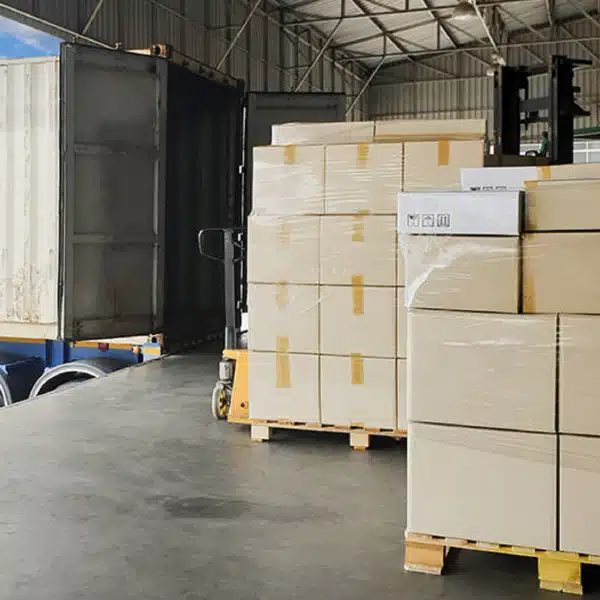
Your pallets ride with other consignments. Save the full-lorry cost without missing your delivery date.