 If you manage industrial machinery, you know that each logistics decision has a direct impact on production. And even so, many times transportation is left for “when we have everything clear.” The problem is not just the delay. It's what happens next: emergencies, technical failures, unforeseen costs and operational pressure. We understand it. Nobody wants to move machinery without complete data. But waiting too long also has a price. This is where a specialized transport company comes in as a guide. Not to sell you a service, but to help you make decisions on time, with judgment and without hidden risks. Let's see what happens when you delay transportation... and how to avoid it.
The real problem with delaying logistics decisions
Delaying industrial transportation does not reduce risk... it moves it to the worst possible moment. In industrial sectors, logistics is not an “extra”. It is part of the production system. When you postpone decisions like:- Request quote
- Confirm measurements
- Validate routes
- Book a vehicle
Real risks: when time is against you
The biggest risk is not transportation. It's not doing it on time. In industrial machinery, an unplanned stop can block an entire production line. When maintenance depends on a move... delaying it multiplies the risk.
Increase in operating costs
The more urgent, the less room for negotiation. In transportation:
- Fewer suppliers available
- Fewer route options
- More pressure on time
Result: you pay more for less flexibility.
Lack of vehicle availability
Especially in machinery transportation (gondolas, platforms, special trucks), availability is limited. And here comes a key point of the sector:It's not just about price. It's about real availability at the critical moment.
Real case: when waiting 3 weeks changes everything
The current situation in Madrid:- 2 industrial machines
- Locations: Fuenlabrada and Getafe
- Destination: Sabadell (Barcelona)
- Height: 14.76 feet
The initial plan was to evaluate if they could go in a single gondola, wait for definitive measures and pass the budget to the boss, but the decision was to wait. The result after 3 weeks was that a machine suffered total rotor failure and immediately requested transporte urgente immediately.
A radical change:
De planificacion → urgencia critica From optimisation → reaction
Conclusion? What was going to be an optimized transport... became an urgent operation with greater risk and cost.
Bureaucracy in industrial transportation (and why it doesn't wait)
Special transportation is not just moving cargo, that is why it includes:- Vehicle registration certificates
- Route planning
- Height/weight restrictions
- Loading and unloading coordination
- documentation obligatoria (CMR, control, etc.)
How a professional transport company works
A good Madrid transport company does not wait to have everything perfect and works in parallel:
- Analyze available data
- Propone escenarios (1 gondola vs 2, rutas, tiempos)
- Reserve options
- Adjust when final data arrives
This reduces:
- reaction time
- Unforeseen costs
- Operational risk
Common mistakes and how to avoid them
Error 1: Waiting to have all the data Solution: Work with ranges (estimated weight, approximate measurements)Mistake 2: Thinking that “there will already be trucks available” Solution: reserve options beforeMistake 3: Seeing transportation as a cost, not a risk Solution: evaluate impact on productionMistake 4: Failing to anticipate permissions or restrictions Solution: check before confirming datesMistake 5: Not having plan B Solution: define alternatives from the beginning
When it is convenient to wait (and when it is not)
Yes, it is advisable to wait:
- Major changes to production
- Complete uncertainty regarding the measures
It is not advisable to wait:
- When there is scheduled maintenance
- When there is a risk of failure
- When transportation requires special permits
How to choose transport companies in Spain without failing
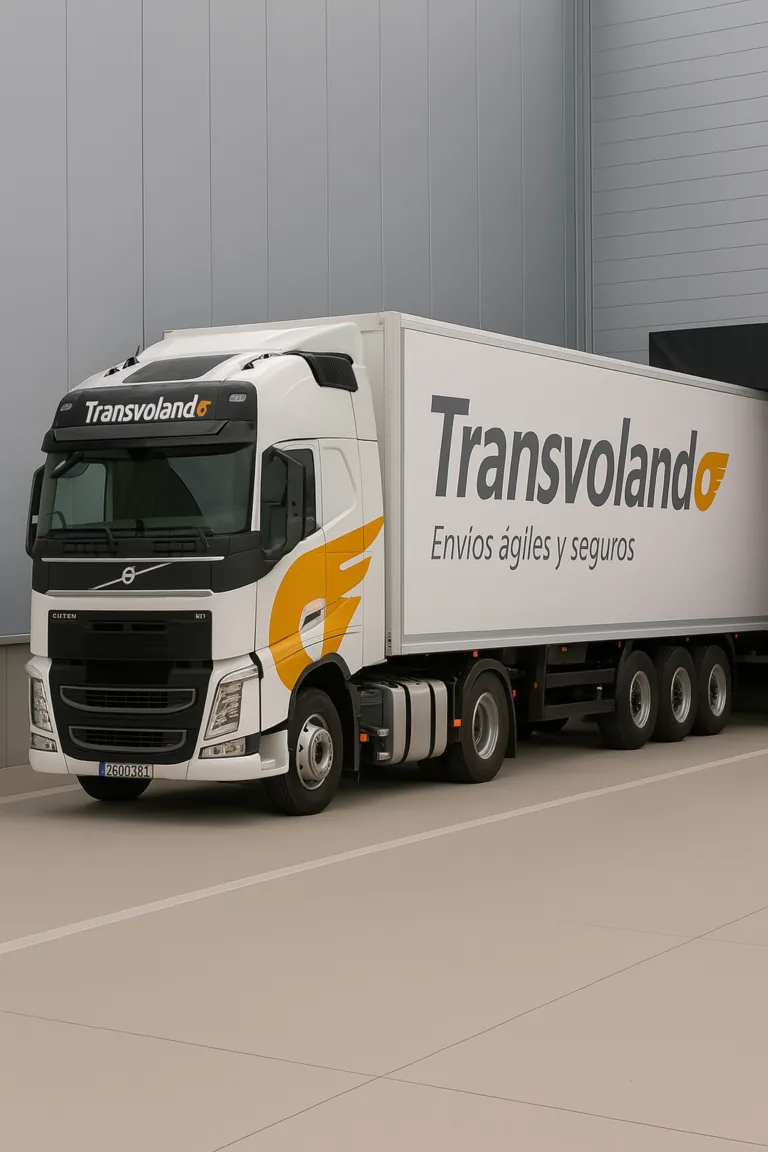
Not all transport companies in Spain work the same. Transvolando focuses on providing an exexperience in machinery, with capacidad de reaccion mediuante una red from reliable suppliers providing a gclear documentation and a comunicacion constante. Recuerda no escatimes eIn logistics for your company, cheap is usually expensive.If you are considering a transfer and you still don't have all the information, nothing happens. A good initial analysis can save you problems later. If you are considering transporting machinery, you can see how this type of service is structured here: Transporte de Maquinaria
You also can check what you give us.
We are waiting for you! Request your quote in less than 3 minutes at just one click.Frequently Asked Questions about Risks of Delaying Logistics Decisions
How much does it cost a business to delay deciding to switch freight forwarder?
The hidden cost of delay adds up to: 1) 5-8% surcharge on non-renegotiated rates (market evolves). 2) 2-4% of shipments with additional incidents × average claim cost €200-500. 3) Loss of clients due to poor service (Aslog study: 12% B2B clients abandon after 3 incidents). For a company with 1,000 shipments/year, delaying the decision for 6 months costs between €8,000-25,000 + reputational damage. ROI of the change is <60 días en la mayoría de casos.
What logistics decisions are critical and cannot be delayed beyond 30 days?
Five time-critical decisions: 1) Annual agency contract renewal (anti-auto-renew clauses expire). 2) Activation of new channels (product launch, geographic expansion). 3) Adaptation to new regulations (Euro VII, Crea y Crece Law). 4) Response to a competitor’s offer to win over your client. 5) Renewal of CMR insurance before premium increases. Every day of delay on these decisions translates to quantifiable lost margin or market share.
How do I tell if my business is losing competitiveness due to logistics delays?
48 hours in national groupage = problem). 2) % shipments on time falls below 95% (OTIF standard). 3) Customer complaints increase quarterly. 4) Your best client mentions “we are comparing alternatives.” If two or more are met, the company is losing measurable competitiveness. Request an external audit to identify root cause: agency, internal processes or technology.
What steps does an industrial business take when it detects logistics drag?
90-day roadmap: 1) Days 1-15: audit of logistics KPIs (OTIF, cost/shipping, incidents). 2) Days 15-30: comparative budgets from 3 alternative agencies. 3) Days 30-45: parallel test with 2 agencies on selected routes. 4) Days 45-75: decision and progressive migration. 5) Days 75-90: measurement of results and consolidation. Without a structured plan, "intentions to change" last 12-18 months with a hidden cost of loss of margin.
Why do industrial businesses delay logistics decisions and how do you stop it?
Four psychological reasons for delay: 1) Status quo bias (inertia is comfortable). 2) Sunk cost (years invested with the current agency). 3) Fear of operational change (known process versus uncertainty). 4) Lack of internal KPIs to quantify the loss. The antidote: measure OTIF, cost per kg, and incident rate monthly, then compare against sector benchmarks. If the numbers are bad, the change justifies itself. Without numbers, inertia wins.
Need express freight?
You need it now. We collect within 2 hours and update you at every stage.