- Broad geographic coverage with a large network of stable and daily relationships between branches and delegations at a national and international level
- High knowledge and experience in our operations and loss reduction, thanks to the broad experience of our agents
- Reduction essential reduction of costs storage, distribution and transport
What functions does a logistics operator perform?
Depending on the logistics operator contract established with the company, the following main functions are distinguished:- Distribution and transportation: Organization of routes by traffic agents, as well as the transit or customs operations that these involve in the transportation of goods.
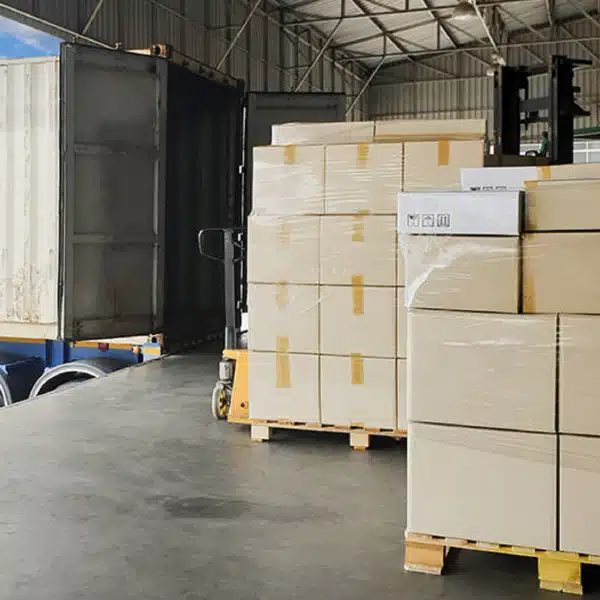
- Warehousing and stock management: Reception of goods, quality control, quantity, stock control, packaging phases... In order to take care of the entire merchandise and solve all the inconveniences of both space and time until delivery.
- Marketing and merchandising: Computer processing and monitoring of orders and shipments, that is, 24-hour monitoring of orders, invoices, loading and unloading points, location of merchandise... What better way to know where your merchandise is? The uncertainty is over!
What types of logistics operators are there?
Depending on the logistics operator contract established with the company, the following main functions are distinguished:- Distribution and transportation: They consist of the organization of groupages of loads, distribution of goods at a local, national or international level... This function is summarized as the organization of routes by traffic agents, as well as the transit or customs operations that these imply in the transport of goods.
- Warehousing and stock management: They are in charge of receiving goods, quality control, quantity, stock control, packaging phases... Product storage in order to not give the customer headaches with where to leave their merchandise, or what to do with it, since we take care of it!
- Marketing and merchandising: Computer processing and monitoring of orders and shipments, that is, 24-hour monitoring of orders, invoices, loading and unloading points, location of merchandise... What better way to know where your merchandise is? The uncertainty is over!
WHAT TYPES OF LOGISTICS OPERATOR ARE THERE?
There are different types of logistics operators, generally known as Party Logistics and referred to as PL.They are classified based on the areas or phases in which they are executed in a logistics chain::- First Party Logistics 1PL
- Second Party Logistics 2PL
- Third Party Logistics 3PL
- Fourth Party Logistics 4PL
- Fifth Party Logistics 5PL
WHAT IS A LOGISTICS PLATFORM?
 Is a logistics platform the same as a logistics operator? No!
A logistics platform It is located in ports, airports, railway terminals and road transport centers.A logistics platform is located in ports, airports, railway terminals and road transport centers.According to the European Association EUROPLATFORMS, a logistics platform is:
Is a logistics platform the same as a logistics operator? No!
A logistics platform It is located in ports, airports, railway terminals and road transport centers.A logistics platform is located in ports, airports, railway terminals and road transport centers.According to the European Association EUROPLATFORMS, a logistics platform is:“It is a delimited area within which, by different means, operadores logisticos, all activities related to logistics and the distribution of goods, both for international and national transport.”Logistics platforms are divided into a series of areas according to their functions:
- Services to workers: There are rest areas, workshops for transport vehicles, customs matters...
- Services to logistics companies; There we find warehouses, areas for handling merchandise, preparing merchandise or picking...
- intermodal services; They allow exchange between different modes of transport, generally using containers as a means of loading for said transport.
Do you need anything else…?
Many times we need the support of something more than a word.
If we can help or accompany you in this process of choosing our services, contact us and we will respond as soon as we put the brakes on!
budget
If you are here it is because you need a freight transportation service and we are sure that we can provide it! Ask us for a free quote en menos de 3 minutos a tan solo un click.Frequently Asked Questions about Logistics Operator (3PL)
What exactly is a logistics operator (3PL) and when does a business need one?
3PL (Third-Party Logistics) = company managing the WHOLE logistics chain for its client: warehousing, picking, packing, transport, distribution, inventory management. Needed when: 1) You have above 5,000 shipments/month and multiple channels. 2) You don’t want to manage logistics internally. 3) You want to scale without investing in own warehouse/fleet. 4) You need multiple geographies. 5) You want WMS-TMS technology without direct investment. 3PL cost: 8-15% logistics turnover.
What concrete services does a 3PL offer and how does it differ from transport only?
Typical 3PL services: 1) Multi-client warehousing with digital WMS. 2) Personalised picking and packing. 3) Labelling and kitting (product assembly). 4) Integrated transport and distribution. 5) Reverse logistics (returns). 6) Analytical reporting. Difference vs transport only: 3PL manages warehouse + transport + distribution end-to-end. Transport only moves cargo. For B2B with multi-channel (B2B + e-commerce + retail), 3PL is a strategic enabler.
How do I select the best 3PL for my business by volume and sector?
Five selection criteria: 1) Sector specialisation (pharma, food, e-commerce, B2B industrial). 2) Geographic coverage adapted to your markets. 3) WMS technology and APIs for ERP integration. 4) Certifications (GDP, HACCP, ISO 9001/14001). 5) Pricing model (fixed vs variable by volume). Request three comparable proposals, case studies and client references. Typical decision: 3-6 months with pilot.
What risks does outsourcing logistics to a 3PL carry and how do I mitigate them?
Five critical risks: 1) Loss of operational control (mitigation: strict SLA + dashboard). 2) Supplier concentration (mitigation: NOT 100% one 3PL, keep 20% alternative). 3) Cost rigidity if volume drops (mitigation: flexible contract). 4) 3PL bankruptcy (mitigation: financial due diligence). 5) End-client data confidentiality (mitigation: NDA + ISO 27001). Annual 3PL audit essential.
When should I migrate from traditional transport to 3PL and what ROI to expect?
Transition justified when: 1) >2,000 shipments/month with multiple destinations. <500K€/año: 3PL no compensa, mantén transportista directo + WMS propio.
Need full-truckload (FTL) haulage?
Dedicated lorry for your cargo, 2-hour collection and the same contact throughout.