Advantages of freight transportation
- Suitable for international freight traffic
- Wide coverage
- Transportation of high-cost products, parts, urgent goods…
- High volume gran volumen
- Easy access
- There are no physical barriers, That is, we can carry out the transportation in a single trip regardless of the origin and destination of the merchandise. (We will always take into account customs conditions to be able to carry out transportation successfully).
Speed and efficiency
Air freight transport in Europe stands out for its speed and efficiency, ideal for urgent or high-value shipments. With optimized operations and strategic routes, airlines guarantee deliveries in hours or days, overcoming the limitations of land or sea transportation, even over intercontinental distances.Extensive international coverage
Air cargo transportation stands out for its extensive international coverage, allowing transportation companies to connect global markets quickly and efficiently. An air transport company facilitates international logistics, optimizing times and ensuring the delivery of goods to remote destinations with high safety standards. This service. It is ideal for urgent goods, guaranteeing safety and efficiency in global logistics, especially in transport to Europe.Less handling and risk reduction
Air cargo transportation stands out for significantly reducing the handling of goods, since shipments are usually moved directly from the point of origin to the final destination. An air transport company implements rigorous security and packaging protocols, minimizing risks of damage, theft or loss. This approach ensures greater integrity and reliability in international logistics.Ideal for urgent or high-value merchandise
Air transport is key for urgent or high-value goods, such as medical, electronic or perishable products, due to its speed and security controls. The transport companies air transport implement specialized protocols to guarantee optimal conditions, such as controlled temperature and safe handling, minimizing risks and ensuring efficient deliveries.Types of air freight transport
They can be classified in two ways: general cargo transport and special cargo transport.General Cargo Transportation
General cargo transportation includes standard goods such as parcels, commercial products and non-hazardous materials. In Europe, this service is highly efficient, with airlines and logistics operators using cargo planes and slots on passenger flights to maximize capacity and reduce costs.General Cargo Transportation
This type covers goods that require specific conditions, such as perishable products, pharmaceuticals, dangerous or oversized cargo. In Europe, advanced technologies, such as refrigerated containers or specialized security systems, are used to ensure regulatory compliance and cargo integrity.Load centers and their role in the transportation of goods
An airport is mainly divided into two areas: boarding of people or goods. Therefore, when an area of the airport is dedicated to the embarkation or disembarkation of goods, it is important to mention the cargo terminals.What is an air cargo center?
An air cargo center is created with the main objective of contributing to the development of industrial activities and logisticIt is usually made up of a set of platforms, docks and circuits for the merchandise to circulate. For example, the Valencia air cargo center according to an Aena article: "It has an area of 3.1 hectares on the first line, with warehouses for cargo handling and autohandling activities, and"It has an area of 3.1 hectares on the first line, with warehouses for cargo handling and autohandling activities, and a second line area, of 2.8 hectares, with warehouses for freight forwarders and logistics operators. In addition, the Center has a Border Inspection Post (PIF) and a three-story general services building."What is a handling agent? It is an agent external to the company that belongs to a private freight forwarding service entity. And an autohandling? It is an agent that belongs to the airline itself (the most used system in Spain). When transporting goods, the following elements intervene: Loading and unloading the plane in the check-in or check-out area Transportation of unloaded merchandise to the cargo storage a
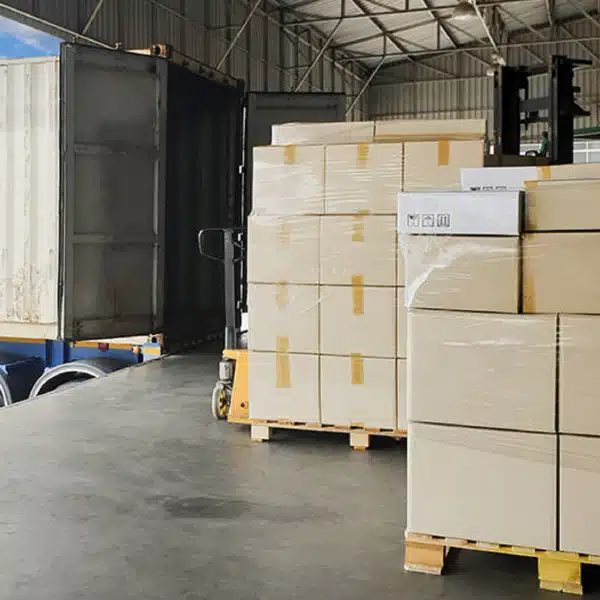
- Loading and unloading the plane in the check-in or check-out area
- Transportation of unloaded merchandise to the cargo storage area of the terminal
- Inspection, preparation and storage of merchandise for subsequent delivery.
Process of transporting goods in an airport

Physical flow in air cargo transportation

Documentation necessary for the transport of goods by air
The requirements to be able to transport the merchandise is the following:- Formalization of the transport contract
- Shipping documentation: In this case, we refer to all the documentation necessary for customs clearance.
- Marking of of merchandise with identifiers of the importing company
- Well packed and packaged
- Individually labelled packages and with correct visibility.
Documentos esenciales
- Air Waybill (AWB): Main document that acts as a contract between the shipper and the airline, detailing the merchandise, origin, destination and conditions of transport.
- Factura Comercial: Specifies the value, description and terms of sale of the merchandise, necessary for customs procedures.
- Certificate of Origin: Accredits the country of manufacture or origin of the cargo, required for tariffs and trade agreements.
- Dangerous Transport Document (IATA DGD): Mandatory for dangerous cargoes, complying with IATA and ADR regulations.
- Customs Declaration: Presented to the customs authorities for the clearance of the merchandise.
- Permisos Especiales: Necessary for restricted merchandise (e.g. pharmaceutical products, live animals or cultural goods).
- Packing List: It details the contents of each package, facilitating inspection and verification.
How to choose the best freight transportation service?
To choose the best service, evaluate the provider's experience on international routes, its ability to handle your type of cargo and flexibility in delivery times. Prioritizes companies with tracking technology, broad coverage and good practices in sustainability, key in current air transport in Europe.Factors to Consider
Consider the capacity to handle special merchandise, real-time tracking technology and flexibility in the event of unforeseen events. Don’t hesitate to ask us!Do you want to know the amount of your shipment in less than a minute?
Request your quote in less than a minute.Frequently Asked Questions about Air Freight
When is air transport better than road or sea for B2B cargo?
Air wins when: 1) Critical lead time <72h door-to-door. 2) mercancía valor alto>€50/kg (the security and deadline premium justifies the cost). 3) Perishable merchandise (health products, biotech). 4) Product launch with a fixed date. 5) Critical piece for stopped production line. Road and maritime gain in high volume standard merchandise. Air costs 5-10× more per kg but saves critical time.
How much does air freight cost and what factors influence it?
Indicative rates 2026 from Madrid: 1) Europe (Frankfurt, London): €4-7/kg, lead time 12-18h door-to-door. 2) USA (NYC, Chicago): €6-12/kg, lead time 24-36h. 3) Asia (Tokyo, Shanghai): €8-15/kg, lead time 36-72h. 4) South America (Buenos Aires): €7-11/kg, lead time 36-48h. Variables: weight, cargo type (hazmat, perishable), urgency (express +50%), direct route or with connection.
What specific documentation does international air freight require?
Mandatory documents: 1) AWB (Air Waybill) — issued by airline or IATA agent. 2) Detailed commercial invoice with TARIC code. 3) Packing list per parcel. 4) Export SAD if outside EU. 5) Certificate of origin if tariff preference applies. 6) TSA (USA) or EASA (EU) security certificates. 7) Specific certificates: sanitary, phytosanitary, ADR if dangerous. Without correct paperwork: flight cancelled or hold. Your agency or IATA agent manages.
What type of cargo CANNOT be sent by air and what restrictions apply?
IATA air restrictions: 1) Class 1 dangerous goods (explosives) — absolutely banned. 2) Class 2.3 (toxic gases), class 4.1 (self-reactive) — severe restrictions. 3) Class 7 (radioactive) — only certified airlines. 4) Lithium batteries — specific restrictions (UN 3480/3481). 5) Live animals (with IATA Live Animal certificate). For sensitive cargo: contract IATA agency with prior experience. Verify before buying cargo ticket.
How do I insure high-value air cargo during transport?
Standard covers: 1) Standard AWB cover around 17 SDR/kg (~€22/kg) — insufficient for high value. 2) Ad valorem with value declaration (premium 0.3-0.8% of declared value). 3) All-risk with broad cover (premium 0.5-1.2%). 4) War risk if sensitive destination. 5) Delay insurance if critical lead time. For €100K air shipment: all-risk premium ~€600-1,200. Clear ROI versus standard cap 22€/kg = max €17,000 covered. Essential for high value.
Need specialist haulage?
Loads that won't fit a standard trailer — we handle permits, routing and escort.