Discover practical strategies to optimize business transportation and reduce expenses
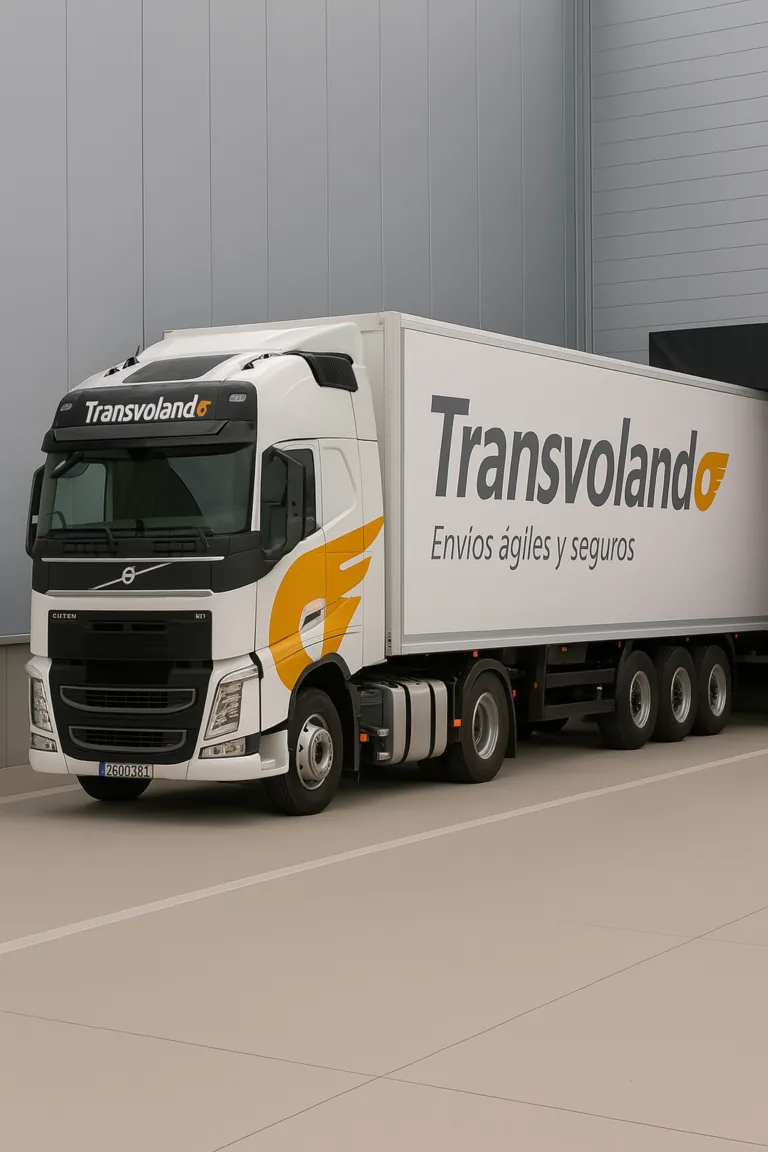
If you manage operations, you already know: the real savings are not only in the rate, but in avoiding stops, rejections and waiting. Choose a national and international transport company That lives 24/7 for your cargo makes the difference compared to suppliers that “disappear” when something gets complicated. In transportation for companies, dedicated attention is the insurance policy for your margins. One early morning, 3:00 a.m. A client needed to send 4 32" and 6 m long tubes to Belgium with maximum urgency. He required vehicle confirmation, specific adaptation and continuous monitoring with a resolution in less than 24 hours. In Transvolando We activate a crisis protocol: immediate diagnosis, coordination with the warehouse and selection of a gondola-type low platform truck, equipped with “V” cradles for tube holders, non-slip pads and certified straps. We adjusted documentation and loading windows, defined route, checkpoints and plan B. The dedicated manager kept the client informed at all times. Result: departure on time, delivery without incidents and zero costs for retries or immobilizations. The difference was not the “price per kilometer”, but prevention. So that each shipment adds and not subtracts, apply this practical guide before assigning any service:- 24/7 manager and clear SLA. Inflation can directly affect the price of fuel, which is one of the biggest costs for truckers. If there is an increase in oil prices or increased demand, fuel costs may increase, impacting transportation costs and potentially resulting in higher shipping rates.
- Appropriate vehicle from minute zero. Inflation can also affect labor costs, such as the salaries of drivers and employees in the transportation sector. If wages increase due to inflation, this can have an impact on the operating costs of transport companies, which can lead to a definition in transport rates.
- Real traceability. Ask for tracking milestones (loading/departure/border/delivery) and photographic evidence when applicable.
- KPIs that matter. Load status and truck confirmation time and average incident resolution.
- Documented Plan B. Route/vehicle alternatives and protocol in the event of closures, strikes or adverse weather.
- Total cost, not just fee. Cheap national transport companies. They can be very costly if they fail in punctuality, communication or equipment. Calculate downtime, penalties and reputational risk.
- Continuous improvement. After each service, review deviations and apply learnings to the next. Composite efficiency is the biggest savings of the year.
How we do it at Transvolando
We work with a 3-step logistics plan:
- Diagnostico y cotizacion a medida: We understand your urgency, particularities and restrictions.
- Execution with proactive monitoring: Specialized fleet, dedicated manager and transparent communication.
- Delivery and optimization: Performance report and recommendations to reduce future costs.
Frequently Asked Questions about Real-World Logistics Cases for Companies
What types of B2B logistics cases are most common at a freight forwarder?
Five typical profiles: 1) Wholesale distributor (daily multi-destination shipments, variable weights). 2) Manufacturer with a single client (fixed weekly routes, steady volumes). 3) B2B e-commerce (seasonal peaks, critical lead times). 4) Importer (consolidation at port plus national distribution). 5) Construction company with scattered sites (one-off FTL to sites, unpredictable schedule). Each profile demands different solutions. Ask your agency for cases similar to yours before signing.
How does a business learn from the real-world cases of other companies in the sector?
Three learning channels: 1) Public case studies from serious agencies (check they are verified with a real client, not marketing). 2) Sector associations (CETM, ANTID, Aslog) — they share anonymised benchmarks. 3) Networking with CTOs/COOs in your sector — they tend to share both good and bad experiences. Anti-pattern: trusting anonymous testimonials on the agency’s website (self-promotion risk). When contracting, ask for a named client reference with a phone number you can call.
What logistics cases typically generate the biggest savings for mid-sized companies?
Five cases with fast ROI (Five cases with fast ROI (under 6 months): 1) Move from one-off FTL to a fixed annual rate with committed volume (18-25% saving). 2) Consolidate suppliers at the origin hub instead of direct shipments (12-20% saving). 3) Automate ETA and client notifications (cuts customer service calls by 30-40%). 4) Double-deck instead of standard for stackable cargo (+14% capacity at no extra cost). 5) Cross-docking instead of intermediate warehousing (cuts stock 20-30%). Audit these five fronts in your current operation.
What logistics mistakes show up in real-world cases and how do you avoid them?
Five recurring mistakes: 1) Underestimating volumetric weight when quoting (surprise reweigh charge). 2) Agreeing per-kg rates without a fuel clause (you pay more when diesel rises). 3) Not formalising a framework contract (in disputes, default LCTTM applies and may not protect you). 4) Not verifying the carrier’s current CMR insurance. 5) Paying past the legal 60-day term (penalty €1,000-6,000). A preventive audit at contract signing avoids 80% of these mistakes.
How do I build a logistics dashboard for my business?
2) Cost/shipping per route (alert if it rises >5%). <2% del total mensual). 4) % facturación retrasada (impacto cash flow). 5) Huella CO2 acumulada (CSRD). 6) NPS clientes (calidad percibida). 7) Capacidad utilizada vs reservada. Herramientas: Power BI o Looker conectados a TMS. Coste: 1.500-3.000€ implementación + 200€/mes licencias.
Need full-truckload (FTL) haulage?
Dedicated lorry for your cargo, 2-hour collection and the same contact throughout.