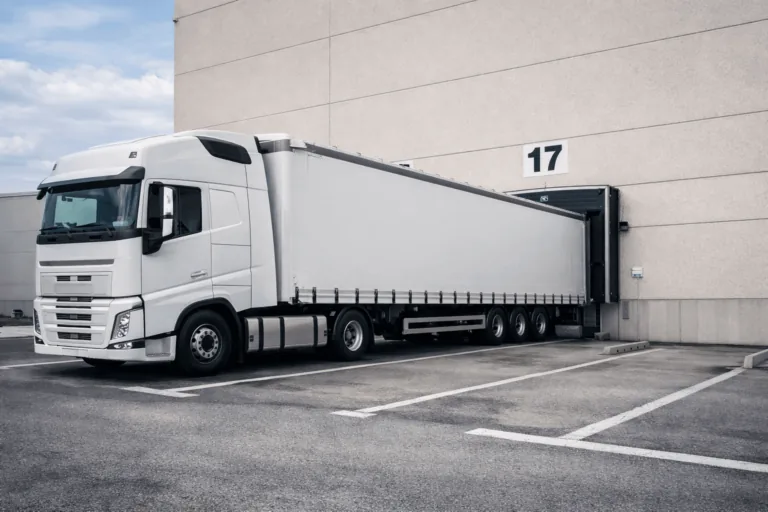
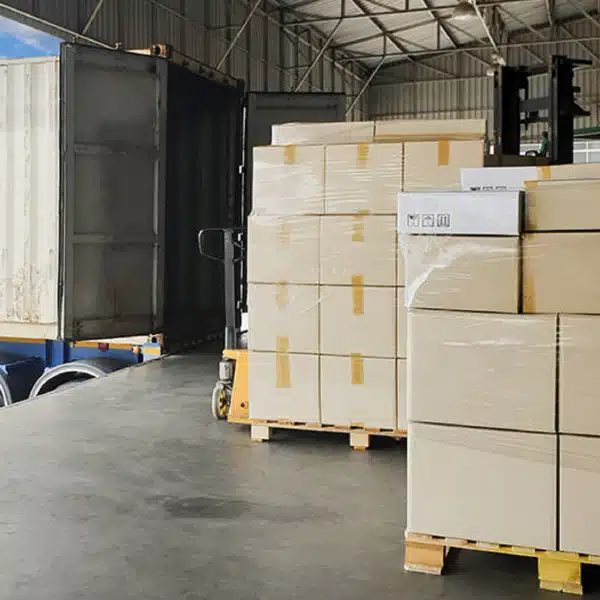
Road transport is one of the fundamental pillars in the modern logistics,, being key to the global economy and international trade. Its versatility and efficiency make it the most used means of distributing goods. However, like any service, it has both advantages and disadvantages.
Road Transportation: Advantages, Disadvantages and Modern Logistics
Road freight transport has remained a solid and expanding sector, especially in Spain. With the increasing demand for e-commerce, the need for a efficient transportation and punctual is greater than ever. Despite the price advantages of public transport, road freight transport offers flexibility, faster delivery times and direct access to destinations without time or load restrictions.
Transportation of Goods by Road: Current Situation and Challenges
Consolidated Growth in the Sector
Road transport has shown sustained growth, with an increase in 2.1% increase in 2016 according to the DBK Observatory, and this positive trend has continued since 2014.
Contribution to Economic Recovery
The sector has played a fundamental role in the economic recovery, driven mainly by the rise of electronic commerce, which increased parcel shipping almost by 21% in 2015.
Why choose us for your road transport?
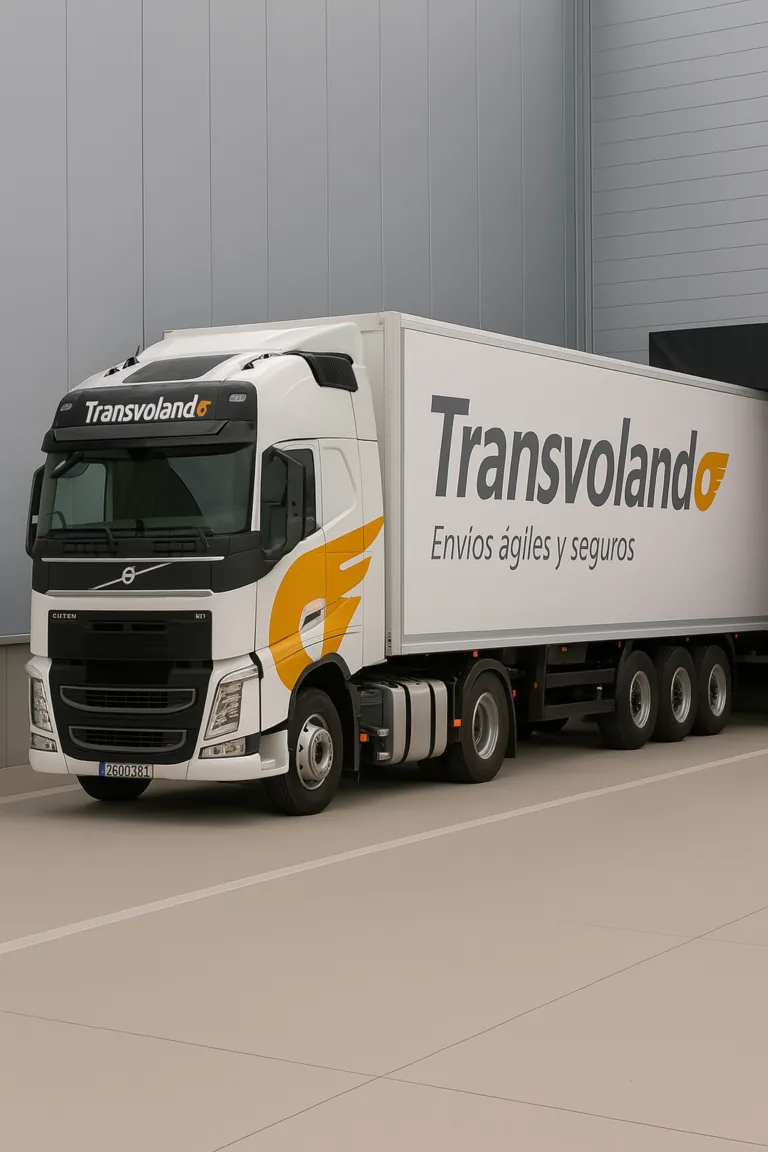
En Transvolando, we specialize in offering road transportation solutions adapted to the needs of each client.
- Experience and Professionalism: Over a decade of experience in the sector.
- Technology and Traceability: Real-time tracking with GPS technology.
- Flexibility in Management: Different packages adapted to each need.
- Personalised Attention: A team dedicated to guaranteeing your logistical peace of mind.
Advantages of Road Transport
Private road transport has established itself as the most chosen option globally due to its multiple benefits:
1. It is the most widely used medium
Thanks to an extensive and connected road network, it allows us to reach areas where other means do not have access, facilitating distribution throughout the territory.
2. It is the most economical way
Initial operating costs are lower compared to other types of transportation, making it ideal for companies looking for efficiency without compromising quality.
3. 3. It is the most direct service
It allows door-to-door deliveries without the need for transfers, reducing time and risks in the handling of goods.
4. It is the most flexible
It easily adapts to different volumes and schedules, allowing the personalization of the service according to the needs of each client.
5. Allows the transport of dangerous goods
It is adapted and regulated for the safe transport of dangerous goods, complying with specific regulations.
6. Facilitates the traceability of merchandise
With the implementation of technologies such as GPS and fleet management systems,, shipments can be tracked in real time, improving security and efficiency.
Disadvantages of Road Transportation
Despite its many benefits, road transportation presents certain challenges:
1. It has a high accident rate: Road transport has a higher accident rate than other means, although the sector is investing in in training and fleet renewal to minimize this risk.
2. It is the most polluting behind the plane: Although it is an efficient means, CO₂ emissions and noise pollution are higher than in other transport systems. However, they are being implemented more efficient engines and biofuels..
3. Transports a smaller volume of cargo: Compared to sea or rail transport, trucks have a lower loading capacity. However, the arrival of the megatrucks with capacity up to 60 tonnes is reducing this disadvantage.
4. It is subject to traffic restrictions
Traffic and jams can affect delivery times, although with the implementation of of route management software This aspect can be optimized.
Logistics in Road Transport: Means of Transport
There are different means of transportation, each with its own advantages and disadvantages:
1. Air Transport
- Advantages: speed, safety and broad coverage.
- Disadvantages: High cost and limited loading capacity.
2. Maritime Transport
- Advantages: High load capacity and low costs.
- Disadvantages: Long delivery times and complex procedures.
3. Road Transport
- Advantages: Flexible, economical and with great coverage.
- Disadvantages: Lower load capacity and higher accident rate.
4. Railway Transport
- Advantages: Considerable load capacity and reduced cost.
- Disadvantages: Limited coverage and slow delivery times.
When is road transportation the best option for your company?
Road transport is the best option for companies that need door-to-door deliveries, flexible hours and fast national distribution.
At Transvolando we manage machinery, large volume and special loads, optimizing routes and costs.
Request a quote for our freight transport service
En Transvolando, we are experts in the management of road freight transport, offering personalized solutions adapted to each logistical need.
News in the Service special transport
We incorporate new specialized transportation options, such as megatrucks and customized solutions for high-volume merchandise.
Implemented Security Measures
Before each special service, we carry out a thorough evaluation to ensure that the merchandise travels safely and in compliance with all current regulations.
Transportation for Events: The Key to Logistical Success
Our Transportation for events ensures that all the necessary material arrives on time and in perfect condition, allowing your event to run smoothly.
Request your quote in less than 3 minutes and discover how we can help you optimize your logistics.
B2B Corridors Spain–Europe: Strategic Routes and Lead Times
For companies with international merchandise flows, road transport is the dominant mode on intra-EU corridors of less than 2,500 km. Typical transit times for groupage (one pallet) door to door:
- Spain–Germany (Madrid–Frankfurt, Barcelona–Munich): 3–5 days | reference price per pallet €220–320
- Spain–France (Madrid–Paris, Barcelona–Lyon): 1–2 days | €180–240
- Spain–Netherlands (Madrid–Rotterdam): 3–4 days | €240–340
- Spain–Belgium (Barcelona–Antwerp): 2–3 days | €220–300
- Spain–Italy (Madrid–Milan, Barcelona–Rome): 2–3 days | €200–280
- Spain–Poland (Madrid–Warsaw): 4–5 days | €280–380
The key factor for B2B is guaranteed capacity during seasonal peaks (Black Friday, grape harvest, industrial campaigns). Operators with their own network and scheduled daily routes reduce stoppages by up to 30%.
B2B Road Transport FAQ
When is it appropriate to contract road transport versus sea or rail transport for a company?
For intra-European shipments of less than 2,500 km, road transport offers the best combination of speed and cost, especially when door-to-door delivery without transhipments is required. Maritime is more profitable for very high volumes on ocean routes; The railway works in predefined corridors where there is an intermodal terminal at origin and destination.
What documentation is needed to send goods by road within the European Union?
The key transport document is the CMR consignment note (Geneva Convention 1956), mandatory in international intra-EU road transport. For dangerous goods, the ADR (European Agreement). Products subject to tariffs require DUA only on non-EU exports.
How is the cost of transporting goods by road for a company calculated?
The price is calculated on the billable weight (greater between actual and volumetric weight = length × width × height cm / 4,000), distance, type of vehicle (van, rigid, trailer, gondola) and additional services (pickup, unloading with lifting platform, deliveries by appointment). For regular B2B operators, contractual rates with monthly volume commitment reduce the unit cost by 15–25%.
What obligations does my company have when hiring road transportation?
The loading company must correctly declare the contents, pack in accordance with the UNE-EN ISO 11607 standard (or sector equivalent), deliver the merchandise in operational conditions and sign the CMR. The carrier's liability is limited to the value of the merchandise up to 8.33 SDR per gross kilo (CMR Convention), so for high-value shipments it is advisable to contract all-risks ad-valorem insurance.
What impact does the EU regulation 2020/1055 (Mobility Package) have on my logistics chain?
The key measures are: mandatory return of the truck every 8 weeks to its country of registration, cabotage restriction (3 operations in 7 days + cooling-off of 4 days), driver remuneration according to the country of loading/unloading, and weekly breaks outside the cabin. This increases costs on long routes but reinforces the reliability of operators with their own networks.
What type of industrial loads can be transported by road?
Virtually all: standard palletized, dangerous goods (ADR), refrigerated (ATP), exceptional loads with special permits (machinery, prefabricated, wind blades), bulk loads, GDP pharmaceutical products, and high-tech with escort and reinforced insurance. Each type requires a specific vehicle and certified operator.
How do I choose between full truckload (FTL) and groupage for my company?
FTL is ideal when more than 60% of the truck's capacity is occupied, there is urgency or the product is sensitive to handling. Groupage is suitable from 1 pallet to partial loads, shares the cost with other merchandise and is more sustainable in terms of CO₂ per transported unit. For repetitive B2B shipments, a combination of FTL + daily scheduled routes optimizes cost and time.
Frequently Asked Questions about Pros and Cons of Road Transport
What are the main advantages of road transport for B2B?
Five decisive advantages: 1) Door-to-door capillarity (door to door without transfer). 2) Competitive deadline (corridors 24-48h vs maritime 4-7 days). 3) Route flexibility (not fixed schedules). 4) Any merchandise acceptable (no specific restrictions). 5) Competitive cost distances under 500 km. For B2B companies with domestic clients: road is the dominant mode (95% of internal Spanish freight). Investment in digitalisation improves competitiveness against alternatives.
What are the real disadvantages of road transport and how to mitigate them?
Five disadvantages and mitigation: 1) Higher cost per ton-km than rail or maritime (mitigation: optimise cubage, consolidate loads). 2) Higher CO2 footprint (mitigation: Euro 6 or electric vehicles). 3) Traffic dependence (mitigation: plan alternative routes). 4) Limited capacity per vehicle (24t max) (mitigation: double-deck, mega-trailer). 5) Driver shortage vulnerability (mitigation: agencies with stable in-house staff). Road remains dominant despite these limitations.
When should I choose road vs rail vs sea for my B2B cargo?
Modal decision by profile: 1) Road: <500 km, mercancía estándar, plazo crítico, capilaridad door-to-door. 2) tren:>Company with diverse flows: use modal combination according to route.
How is road transport evolving with 2026-2030 trends?
Five transformative trends: 1) Fleet electrification (routes under 300 km mainstream 2028-2030). 2) Green hydrogen (long routes 2032-2035). 3) Autonomous Level 3 trucks on motorways (2027-2028). 4) Mass driver-assistance systems. 5) Connected truck platooning. The sector evolves, but road haulage remains dominant thanks to its door-to-door capillarity. For B2B buyers: prioritise agencies investing in these technologies. A real competitive differentiator.
Is it still profitable to invest in road transport vs alternatives for B2B?
2026 ROI analysis: 1) Road: 5-8% margin profitability (pressured but stable). 2) Rail: 8-15% profitability but limited capacity. 3) Sea: 10-20% profitability but long lead times. For B2B business offering national service: road remains backbone. Differentiation: via specialisation (not commodity), digitalisation, sustainability. Businesses investing in these three: 15-25% profitability (vs 3-5% commodity).
Need heavy machinery transport?
Low-loader trailer, permits and escort where required. Loading and unloading supervised.