The transporte de mercancías The cabotage regime is a key option for internal trade in Spain. This regime allows goods to be moved between ports or points in the same country, optimizing costs and times. Below, we explain in detail what it is, how it works and why it is essential for international transport companies.
What is the transportation of goods under the cabotage regime?
Cabotage in the field of international transportation refers to the provision of transportation services within a country by a foreign company. In Spain, international transport companies can carry out cabotage operations under certain conditions established by the European legislation. This favors the optimization of logistics resources and prevents trucks from returning empty after completing an international journey.
How does cabotage work in Spain?
In Spain, cabotage is governed by specific regulations that guarantee its correct functioning. The international transport companies They must comply with requirements such as obtaining special licenses and paying the corresponding taxes.
For international transport to operate under cabotage, they must comply with the regulations established in Regulation (EC) 1072/2009.
Advantages of cabotage for companies
Cabotage offers multiple benefits, such as the reduction of costs coststhe optimisation of tiempos de entrega and the simplification of customs procedures. Its main benefits include a lower environmental impact: Reduces return trips without load, reducing CO₂ emissions. Greater profitability is achieved: International transport companies can make better use of their routes and resources. It also allows better distribution: It facilitates coverage of national routes without the need for additional vehicles.
Differences between cabotage and international transport
Although both regimes are complementary, there are key differences. While international transportation involves the movement of goods between countries, cabotage is limited to the national level. There are 2 key differences, one is that international transport: It involves the transfer of goods between different countries, with specific customs and regulations. While cabotage: It is carried out within the territory of the same country by a foreign company with authorization.
Practical examples of cabotage in Spain
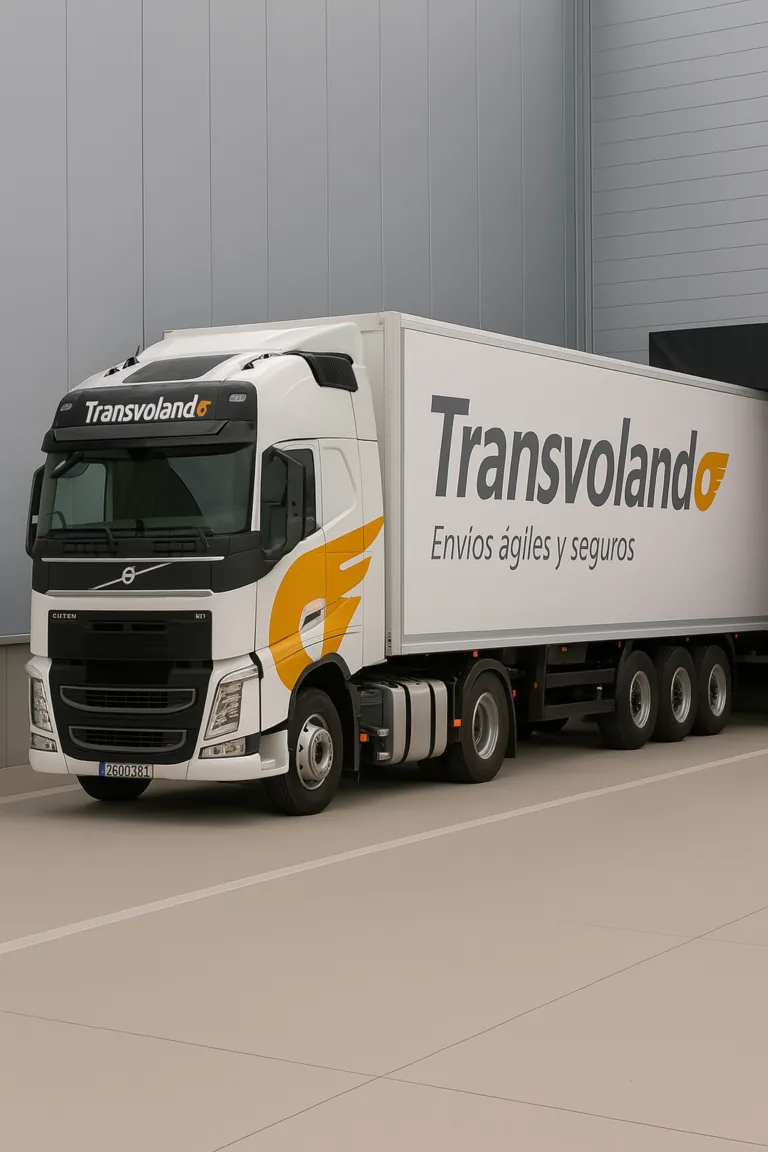
En Transvolando it is common to offer offer services cabotage in Europe, through the transport of goods contacting the ports of Barcelona and Valencia with other parts of Europe. We use this regime to move products such as textiles or industrial materials without resorting to external international routes. This not only reduces costs, but also speeds up delivery, benefiting both businesses and end consumers.
The transport of goods under cabotage is an efficient and profitable solution for internal trade in Spain. Whether for international transport companies or local businesses, this regime offers significant advantages that improve competitiveness and sustainability. If you are looking to optimize your supply chain, cabotage is an option that you cannot ignore.
Si necesitas más información sobre servicios de transporte internacional, contacta con Transvolando.
Frequently Asked Questions about Cabotage in Spain
What is cabotage and when does it apply to road transport within Spain?
Cabotage = internal transport in one country performed by a carrier from another EU country. EU Regulation 1072/2009: maximum 3 cabotage operations in 7 days after an international unloading. So a French carrier delivering in Madrid can make up to 3 internal Spanish deliveries before leaving. For Spanish businesses hiring transport, it’s important to know whether your cargo is moved by a Spanish or foreign carrier (it affects insurance, liability and compliance).
What documentation does cabotage require and who must present it?
Mandatory cabotage documentation: 1) CMR from the previous international operation (proving legal entry into Spain). 2) LCTTM consignment note for each cabotage operation. 3) Valid EU transport licence of the carrier. 4) Digital tachograph with correct rest periods. Documentary responsibility lies with the carrier, but the shipper (your business) is jointly liable if it engages cabotage with an undocumented carrier. Inspectors carry out roadside checks.
Why do some Spanish businesses use cabotage and what risks does it carry?
Attraction: cabotage rates are typically 15-25% cheaper than a pure Spanish carrier (they monetise the return trip). Risks: 1) Foreign carrier’s CMR insurance may have lower cover. 2) Claims are governed by the carrier’s country law (lawsuit abroad). 3) Communication in a different language. 4) Penalties if you exceed 3 operations / 7 days. For serious B2B businesses, the saving doesn’t justify the risks. Prefer a Spanish carrier or a consolidated agency.
How does the EU Mobility Package affect cabotage in Spain from 2022?
The Mobility Package (EU Regulation 2020/1054 + 2020/1055) introduced key changes: 1) 4-day “cooling off” period between cabotages (previously it was immediate). 2) Obligation to return to the carrier's country of origin every 8 weeks (vehicle-to-base return). 3) Salaries of the destination country for drivers (posting rules). 4) Mandatory smart tachograph on all new vehicles. Result: cabotage remains legal but more expensive and bureaucratic. Reduces competitive advantage of foreign carriers.
Is non-EU cabotage legal (Moroccan or British carrier in Spain)?
Extra-EU cabotage: stricter regulation. 1) Post-Brexit UK carrier: cabotage in the EU is prohibited (EU-UK TCA agreement does not allow it). 2) Moroccan carrier: only under TIR Convention for transit, not internal cabotage. 3) Swiss carrier: CH-EU bilateral agreement allows very limited. If an agency offers you a "very low" rate with a UK or Moroccan carrier, it is failing to comply and the joint liability of the shipper can generate a fine of €4,000-€18,000.
Need full-truckload (FTL) haulage?
Dedicated lorry for your cargo, 2-hour collection and the same contact throughout.