If you manage industrial machinery, you know that every logistical decision has a direct impact on production. And yet, transport is often left until ‘when we’ve got everything sorted’. The problem isn’t just the delay. It’s what happens afterwards: emergencies, technical faults, unforeseen costs and operational pressure. We understand that. Nobody wants to move machinery without all the facts. But waiting too long also comes at a price. This is where a specialist transport company steps in as your guide. Not to sell you a service, but to help you make timely, informed decisions without hidden risks. Let’s look at what happens when you delay transport… and how to avoid it.Translated with DeepL.com (free version)
The real problem with delaying logistical decisions
Delaying industrial transport does not reduce risk… it simply shifts it to the worst possible moment. In industrial sectors, logistics is not an ‘extra’. It is part of the production system. When you postpone decisions such as:
- Request a quote
- Confirm measurements
- Validate routes
- Book a vehicle
You’re letting external factors make the decisions for you. And in transport, that usually ends up costing you dearly.
Real risks: when the weather works against you
The biggest risk isn’t the transport itself. It’s failing to do it on time. In industrial machinery, an unplanned shutdown can bring an entire production line to a standstill. When maintenance depends on a transfer… delaying it multiplies the risk.
Increase in operating costs
The more urgent the matter, the less room there is for negotiation. In transport:
- Fewer suppliers available
- Fewer route options
- More pressure on time
The result: you pay more for less flexibility.
Lack of vehicle availability
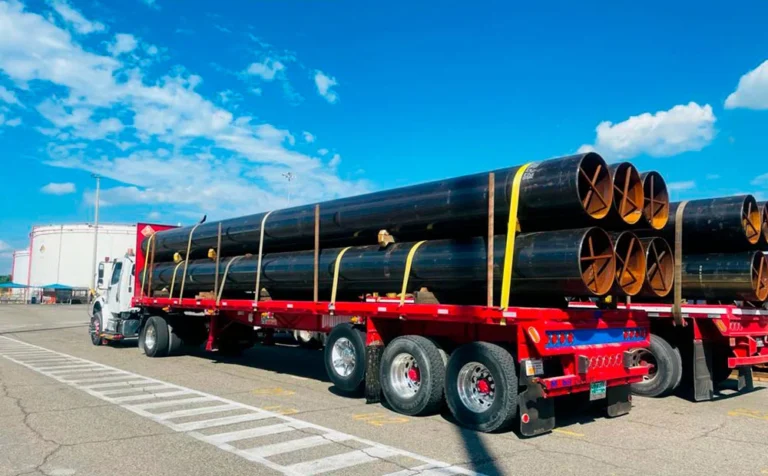
Availability is particularly limited when it comes to transporting machinery (gondolas, platforms, specialised lorries). Y aquí entra un punto clave del sector:
It’s not just about price. It’s about actual availability when it really matters.
Real-life example: when waiting three weeks changes everything
The current situation in Madrid:
- 2 industrial machines
- Locations: Fuenlabrada and Getafe
- Destination: Sabadell (Barcelona)
- Height: 14.76 feet
The initial plan was to assess whether they could use a single gondola, await final decisions and submit a budget to the boss, but the decision was to wait. After three weeks, one machine suffered a total rotor failure and a replacement was immediately requested urgent transport immediately.
A radical change:
From planning → critical urgency
From optimisation → reaction
Conclusion?
What was supposed to be an optimised transport operation… turned into an urgent operation involving greater risk and higher costs.
Bureaucracy in industrial transport (and why it won’t wait)
Specialised transport is not just about moving goods; it also includes:
- Vehicle registration certificates
- Route planning
- Height/weight restrictions
- Coordination of loading and unloading
- Required documentation (CMR, inspection, etc.)
This isn't something that can be sorted out in 24 hours; it always depends on planning.
How a professional transport company operates
Una buena empresa transporte Madrid no espera a tener todo perfecto trabaja en paralelo:
- Analyses available data
- It suggests different scenarios (1 gondola vs 2, routes, timings)
- Book options
- Adjust when the final data arrives
This reduces:
- Reaction time
- Unforeseen costs
- Operational risk
Common mistakes and how to avoid them
Mistake 1: Waiting until you have all the data
Solution: work with ranges (estimated weight, approximate measurements)
Mistake 2: Assuming that “there will be lorries available”
Solution: book options in advance
Mistake 3: Viewing transport as a cost rather than a risk
Solution: assess the impact on production
Mistake 4: Failing to anticipate permissions or restrictions
Solution: check before confirming dates
Mistake 5: Not having a plan B
Solution: consider alternatives from the outset
When it is worth waiting (and when it isn’t)
It is worth waiting:
- Major changes to production
- Complete uncertainty regarding the measures
No conviene esperar:
- When scheduled maintenance is due
- When there is a risk of failure
- When transport requires special permits
How to choose transport companies in Spain without making a mistake
No todas las empresas de transporte en España trabajan igual. Transvolando se enfoca en brindar una experience in machinery, withresponsiveness througha reliable supplier providing aclear document management and aconstant communication. Remember not to skimp onlogistics for your business, cheap often ends up costing you more.
If you’re thinking about a move but don’t have all the details yet, don’t worry. A thorough initial assessment can save you problems later on. If you’re considering transporting machinery, you can find out how this type of service works here: Machinery Transportation
You also can review what you contribute.
We’re waiting for you! Request your quote in less than 3 minutes with just one click.