This article examines freight agency operations with a specific focus on UK-Spain trade, updated for 2026 regulatory and market conditions.
Choosing a freight agency for your UK-Spain lane
UK shippers have two routes to Spanish freight: direct-to-carrier contracts with haulage operators, or working through a freight agency that manages carrier selection, paperwork, customs and service quality as a package. In the UK-Spain corridor specifically, the agency model has become the dominant choice for most shippers — because the post-Brexit complexity of customs, the cabotage-driven economics of backhaul, and the sheer number of moving parts on any cross-border movement reward specialist knowledge concentrated in a single commercial relationship.
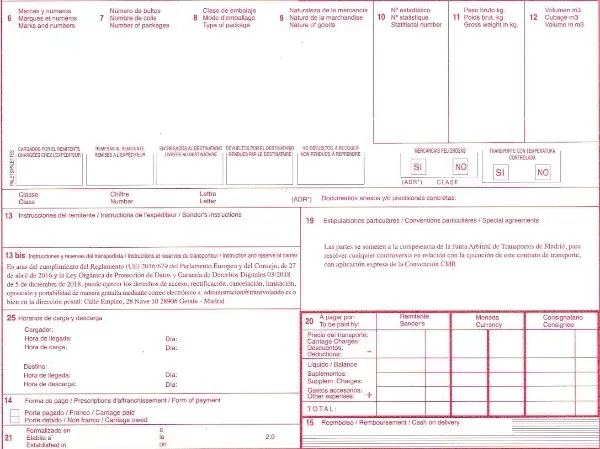
Transvolando is a freight agency, not a haulage operator with its own fleet. Our role is to match each shipment to the right subcontracted carrier, handle all paperwork including CMR/e-CMR, export and import declarations, T1 transit and rules of origin, and guarantee service level through our commercial relationship. The subcontracted carrier model lets us deploy the right equipment — curtain-sider, refrigerated, low-loader, modular — without the capital lock-in of owning the fleet ourselves.
Agency, broker or haulier: three distinct business models
The three models are frequently confused but operate very differently. A haulier owns or leases the lorries and employs the drivers, taking direct operational and employment risk. A broker acts transactionally, matching individual shipments to available capacity on a spot basis for a fee, with no ongoing relationship or service guarantee. An agency sits between the two: long-term commercial partnership with the shipper, access to a curated carrier network, managed service quality and paperwork, commission or margin-based pricing, and — critically — accountability for outcomes rather than just connections.
For UK-Spain lanes, the agency advantage is clearest in four areas: customs expertise concentrated in one desk, backhaul optimisation via established carrier relationships, scheduled departures that beat spot-market timing, and single-point accountability that replaces a tangle of supplier relationships.
What a good agency actually delivers
Five functions separate a professional freight agency from a glorified broker. First, quote discipline: two-hour turnaround with all-in pricing including fuel, tolls, tunnel, customs and risk — no surprises on the invoice. Second, paperwork management: CMR, export/import declarations, T1, EORI validation, rules-of-origin verification. Third, carrier curation: vetted subcontract panel with documented compliance, insurance coverage and performance records. Fourth, visibility and reporting: real-time tracking, ETA updates, temperature trace for reefer work, emissions reports for ESG compliance. Fifth, relationship stewardship: dedicated account management, regular service reviews, proactive problem resolution.
Commercial structure and pricing
Agency pricing is typically all-inclusive per-shipment rates rather than carrier rate-plus-commission. This simplifies budgeting and aligns incentives: the agency earns margin on service delivered, not on volume alone. Spot quotes reflect current market capacity; contract rates offer fixed lane pricing with quarterly reviews and transparent fuel surcharge indexation. For regular volume (typically 20+ pallets per week), contract rates deliver 8-15% savings against cumulative spot-quote spend over a year, plus guaranteed capacity allocation during demand peaks.
Due diligence before appointing a Spanish freight agency
UK shippers should verify four credentials before committing. Operator licence: a valid Spanish Tarjeta de Transporte or International Operator Licence. Insurance: CMR cover plus an additional carrier's liability policy covering the full declared cargo value on typical movements. Customs accreditation: AEAT registration and, for larger shippers, Authorised Economic Operator (AEO) status conferring lighter-touch customs inspection. Subcontract panel audit: documented carrier vetting, Euro VI fleet share, and smart-tachograph compliance.
How Transvolando works with UK shippers
We run a single dedicated UK-Spain desk at our Getafe hub. Every UK client has a named account manager who handles quoting, dispatch coordination, customs queries and service reviews. Regular shippers move to contract rates with quarterly reviews. Ad-hoc shippers get 2-hour quotes with all-in pricing. Tell us your annual UK-Spain freight spend and typical shipment profile; we'll build a proposal tailored to your operational model, not a generic rate card.
Get a UK-Spain freight quote in two working hours
Transvolando is a Madrid-based freight agency specialising in UK-Spain road freight since 1987. From our Getafe hub — five minutes from Madrid-Barajas and two hours from the Channel Tunnel by road — we coordinate full loads, groupage, refrigerated freight, abnormal cargo and event logistics across all of Iberia. Send us the collection postcode, destination, pallet count and required delivery window, and we'll return a fixed price within two working hours.
Frequently Asked Questions
How do I choose a good freight agency?
Check: valid operator licence (MDP/MDL in Spain), insurance (CMR + third-party liability), sector experience, carrier network, tracking technology. Transvolando meets all criteria plus 15+ years' experience in Madrid.
What is the difference between a freight agency and a logistics operator?
A freight agency (like Transvolando) arranges and coordinates shipments: negotiates with carriers, manages documentation, resolves incidents. A logistics operator adds warehousing, picking, stock management and distribution. They are complementary.
What should a serious freight quote include?
Exact origin/destination addresses, cargo description and dimensions, vehicle type, transit time, insurance cover, payment terms, demurrage/waiting clauses. Transvolando delivers itemised quotes within 2 hours.
Can freight prices be negotiated?
Yes, in B2B there's always room. Factors that help: annual volume, daily fixed routes, date flexibility, advance payment. Transvolando agrees annual tariffs with volume-based discounts for recurring clients.
What happens if a shipment is delayed?
Under CMR/LCTTM the carrier must compensate up to the transport price if delay exceeds reasonable timeframes. Transvolando proactively contacts the shipper, seeks alternative solutions and documents incidents for claims.