The Cubing It is a fundamental process in transporte de mercancíasespecially in transportes especiales such as heavy machinery and large containers. It consists of calculating and making the most of the available space, guaranteeing efficiency and safety in loading without exceeding the established weight or volume limits.
Next, we will explain the calculation of the cubic capacity of different containers and special cargoes, as well as the importance of this concept for logistics efficiency.
How to Calculate Cubage in Transport of Machinery and Containers
Cubage is calculated by measuring the total volume occupied by cargo within a container or transport space. The result is the cubic volume, the optimization of which allows maximizing the efficiency of the space that the merchandise will occupy, without compromising safety or exceeding legal limits.
Basic Formula to Calculate Cubicage:
Length × Width × Height = Total Volume (in m³ or cubic meter)
Cubicing for Special Transport in 20 Foot Containers
- Ability: 33.2 m³
- Dimensiones:
- Length: 5.90 m
- Width: 2.35 m
- Height: 2.39 m
- Maximum weight: 26,000 kg
- Empty weight: 2,300 kg
The 20-foot container is ideal for transporting compact machinery and standard cargo that does not require large volumes of space, always considering the kg cubic capacity for efficient distribution.
Capacity and Cubicing in 40 Foot Containers for Machinery
- Ability: 67 m³
- Dimensiones:
- Length: 12.03 m
- Width: 2.35 m
- Height: 2.39 m
- Maximum weight: 28,500kg
- Empty weight: 3,780 kg
The 40-foot container is perfect for transporting larger volume heavy machinery, offering a balance between load capacity and weight.
Cubication in 40 HC Containers for Special Transports
- Ability: 76 m³
- Dimensiones:
- Length: 12.03 m
- Width: 2.35 m
- Height: 2.39 m
- Maximum weight: 30,500kg
- Empty weight: 4,020 kg
The 40-foot High Cube (HC) 40 feet is an ideal option for bulky loads or machinery that requires greater headroom.
Cubication in 45 HC Containers for Customized Transport
- Ability: 86 m³
- Dimensiones:
- Length: 13.56 m
- Width: 2.35 m
- Height: 2.39 m
- Maximum weight: 32,500 kg
- Empty weight: 4,800 kg
The 45-foot HC container It is ideal for personalized transport with large volume loads or large machinery, guaranteeing efficient use of space.
Machinery Transport: Safe and Efficient
Transporting heavy machinery requires detailed planning to ensure safety and regulatory compliance.. Knowing the types of containers suitable for each load is key in this process. Furthermore, a correct calculation of the cubic capacity allows the load to be optimized, reducing operating costs and improving the general efficiency of the service.
Calculation of Box Capacity in the Transport of Machinery
To calculate the cubic capacity of a box, the basic formula is used:
Length × Width × Height
Example: If you have a 50 cm × 40 cm × 30 cm box:
50 cm × 40 cm × 30 cm = 60.000 cm³ (equivalente a 0,06 m³)
This calculation is key to ensuring that the merchandise properly fits the available space in the truck or container.
Transportation Services for Events and Special Projects
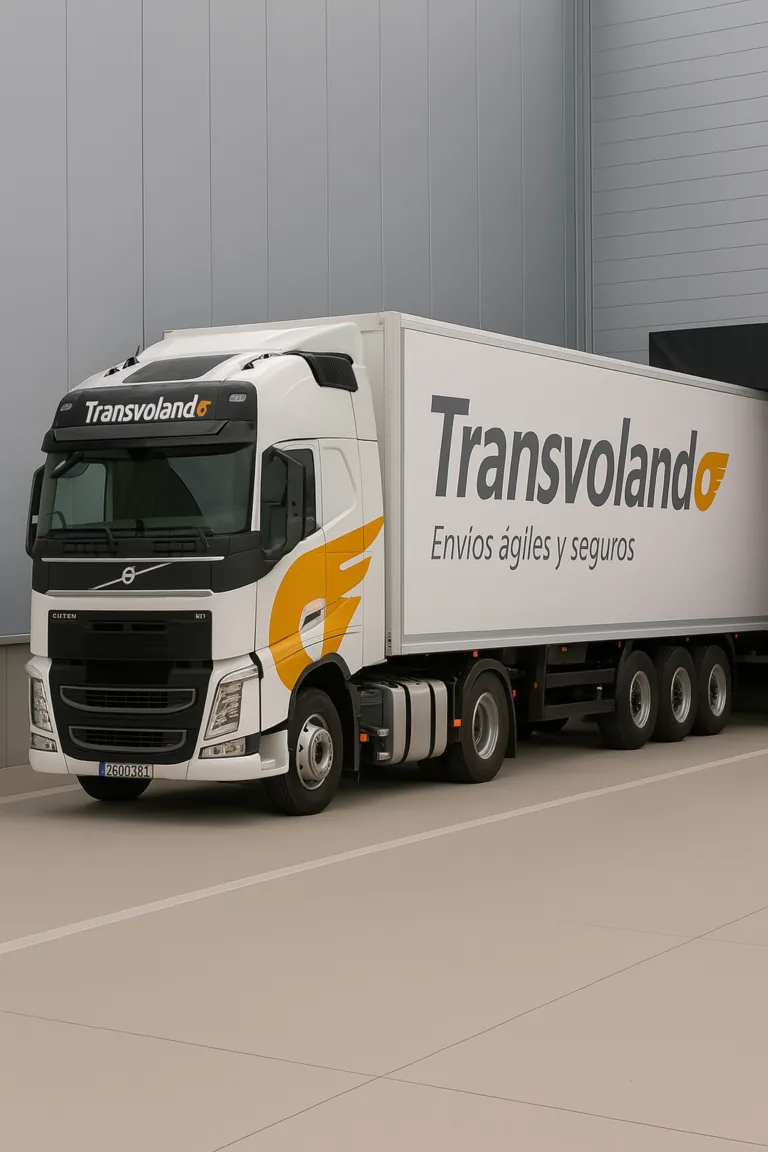
En Transvolando, we offer specialized logistics specialized for special events and projects that require professional and safe handling of merchandise.
Transport of Machinery for Events: Keys to Logistics Success
The success of an event depends largely on impeccable logistics. Our team specializes in:
- Planificacion detallada de rutas y tiempos.
- Safe transportation of equipment and structures.
- Full coordination with the event organizers.
News in Special Transport and Machinery Logistics
En Transvolando, we continue to innovate to offer an even safer and more efficient machinery transport service:
- Implementacion de tecnologia GPS: Real-time tracking.
- Cubic capacity optimization: To maximize loading capacity.
- Continuous training: Drivers specialized in transporting heavy machinery.
Optimize your Transportation with Transvolando
Trust Transvolando for your machinery transport projects and events. We apply a professional and safe approach, ensuring that your cargo reaches its destination in perfect condition.
Request your quote in less than 3 minutes.
Llamanos al 674 346 912 or click here to get your quote.
Frequently Asked Questions about Cubage in Transport
What is cubage and why is it important in calculating transport price?
El cubicaje es el cálculo del peso volumétrico de tu carga. Fórmula estándar para carretera UE: peso volumétrico = (Largo × Ancho × Alto en cm) / 4.000. El transportista factura el mayor entre peso real y volumétrico. Ejemplo: una caja de 100×80×100 cm da 200 kg volumétricos — si pesa 50 kg real, te factura 200 kg. En mercancía voluminosa (espuma, mobiliario, embalaje hueco) el volumen domina el coste. Optimizar el cubicaje ahorra entre 20% y 35% en transporte.
How do I correctly calculate cubage for my B2B cargo?
Tres pasos: primero mide largo × ancho × alto en cm (incluyendo embalaje y palet). Después aplica la fórmula peso volumétrico = (L × A × H) / 4.000. Por último, compara con el peso real y se factura el mayor. Un palet estándar de 120×80×180 cm da 432 kg volumétricos — si el peso real son 1.000 kg, te facturan 1.000 kg. Para carga voluminosa de 50 kg real en caja 200×100×180 cm te facturan 900 kg. Una hoja Excel sencilla automatiza este cálculo.
What cubage ratios apply by transport mode (road, air, sea)?
Cada modalidad usa un divisor distinto: carretera UE 4.000 (1 m³ = 333 kg volumétricos), aéreo IATA 6.000 (1 m³ = 167 kg), marítimo 1.000 (1 m³ = 1.000 kg) y courier express 5.000 (1 m³ = 200 kg). El divisor refleja qué es escaso en cada modalidad: en avión pesa más el volumen, en barco pesa más el peso. Elige la modalidad según la relación entre el peso y el volumen de tu carga.
How do I optimise cubage to reduce transport cost?
Cinco técnicas que funcionan: embalaje compacto sin huecos (ahorra hasta 20% de espacio), productos plegables o desmontables siempre que se pueda, apilamiento óptimo en palet (no piramidal, usa toda la altura), mega-trailer de 3 m de altura frente al estándar de 2,7 m (un 14% más de capacidad sin sobrecoste), y doble piso para carga apilable. Combinándolas, reduces el coste entre 20% y 35% en mercancía voluminosa. La inversión en formar al equipo de embalaje se recupera en 6 a 12 meses.
What consequences does declaring incorrect cubage have for the carrier?
Cinco consecuencias típicas: reaforo en el hub de origen con sobrecargo administrativo de 30 a 50 €, factura sorpresa con el peso facturable correcto (no el presupuesto inicial), retraso en la entrega si el vehículo asignado se queda corto, deterioro de la relación con la agencia (te clasifican como cliente poco profesional) y posible incumplimiento contractual si el volumen reservado no coincide con el real. Para evitarlo: pesa y mide antes de pedir presupuesto. Con un TMS digital el cálculo se automatiza y desaparecen los errores.
Need full-truckload (FTL) haulage?
Dedicated lorry for your cargo, 2-hour collection and the same contact throughout.