Cargo damage in international road freight is the single biggest hidden cost in B2B supply chains. The right freight agency prevents damage through carrier vetting, packaging review, handling protocols and proper insurance — while a poor choice accumulates claims, disputes and customer complaints. This guide explains how to avoid cargo damage and why the choice of agency is the first line of defence.

Common causes of cargo damage in European road freight
- Inadequate packaging: under-rated cartons, poor stretch-wrap, missing corner-boards
- Poor load securing: cargo shifts in transit, collision damage during braking
- Rough handling: at cross-docks, warehouse transfers, customs inspection
- Temperature excursion: reefer failures, cold chain breaks for pharma/food
- Moisture ingress: rainwater, humidity in non-weather-tight trailers
- Theft and pilferage: unsecured truck parking overnight
- Vibration damage: sensitive cargo over long corridors without cushioning
- Mishandling at consignee: unloading with inappropriate equipment
How a freight agency prevents damage
Carrier vetting
A professional agency vets carriers on operator licence, CMR insurance, safety record, staff training, vehicle maintenance and fleet age. Carriers with high claim rates are not onboarded.
Packaging review at quote
At quote stage, the agency reviews cargo description and flags under-engineered packaging. Recommends double-wall cartons, corner-boards, additional void fill as needed.
Vehicle-cargo matching
Right vehicle for right cargo. Reefer for pharma. Box trailer for weather-sensitive. Lowboy for machinery. Load securing equipment matched to cargo profile.
Handover documentation
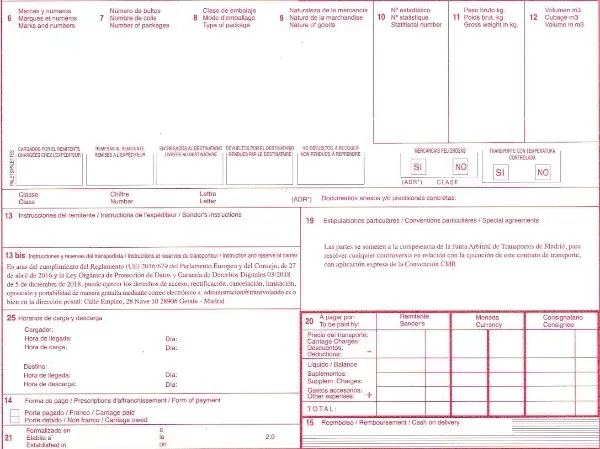
CMR consignment note with cargo reservations. Photos at loading for dispute resolution. Clear handover protocol at cross-docks.
Cold chain integrity
IoT temperature monitoring for reefer freight. Real-time alerts on deviation. Pre-qualified vehicles and drivers.
Secure parking networks
For overnight rest stops, agencies direct carriers to secure truck parking (TAPA-certified facilities). Reduces theft and vandalism risk.
Route planning
Avoid routes with known risk factors (Pyrenees snow season, Alpine closures, cargo-theft corridors). Weather-aware routing.
Insurance coverage
CMR liability + ad valorem where needed. Clear understanding of what is and is not covered.
What shippers should do
- Invest in proper packaging — double-wall cartons, corner-boards, stretch-wrap at 100% coverage
- Label clearly including «Fragile», «This Way Up», temperature requirements
- Declare cargo accurately including fragility and handling notes
- Photograph at loading — dispute-ready evidence
- Request vehicle type appropriate for cargo (not default tautliner)
- Verify carrier insurance and certifications
- Track cargo in transit — GPS, temperature, exception alerts
- Inspect at delivery, note reservations on CMR immediately
Claims process when damage occurs
- Note reservations on CMR at delivery (apparent damage)
- Photograph damage with timestamp
- File formal claim within 7 days (apparent) or 21 days (non-apparent)
- Provide supporting documentation: CMR, invoices, packing list, photos
- Freight agency coordinates with carrier and insurer
- CMR liability cap applies unless declared value raises
- Settlement typically 30-90 days depending on complexity
Damage rate benchmarks
- Excellent: below 0,2% of cargo value
- Good: 0,2-0,5%
- Average: 0,5-1,0%
- Poor: above 1,0% — structural issue with carrier or packaging
Industry-specific damage prevention
Pharma GDP
Temperature-mapped reefers, IoT monitoring, GDP-trained drivers, deviation SOPs, qualified secondary packaging.
Food HACCP
Hygiene-compliant vehicles, pallet exchange programmes, cold chain integrity, pest control measures.
Electronics
Anti-static handling, shock sensors on high-value cargo, air-suspension trailers, secure facilities.
Machinery
Custom cradles, lashing plans, pre-trip engineering survey, escorted transport for abnormal loads.
Frequently asked questions
Who is liable when cargo is damaged in transit?
Carrier liable per CMR Convention (international) or LCTTM (Spain domestic), capped at 8,33 SDR/kg unless raised by declaration. Shipper retains liability for packaging failures.
Does my commercial insurance cover freight damage?
Rarely adequate for freight-in-transit. Ad valorem cargo insurance is the reliable route for high-value cargo.
How do I prove damage occurred in transit, not before?
Photos at loading, CMR signed without reservations, clean packaging evidence. Without pre-loading documentation, claim is harder.
Can a freight agency guarantee zero damage?
No — 100% zero damage is unrealistic. But top-quartile agencies run below 0,3% claim rate consistently; the difference vs 1%+ operators is measurable.
What’s the cost of ad valorem insurance?
Typically 0,2-0,5% of declared value. Much cheaper than absorbing uncovered losses above CMR cap.
Should I photograph every shipment?
Material cargo yes. Low-value commodity freight: spot-check. Dispute defence value compounds with photographic evidence.
Looking for a damage-prevention-focused freight partner?
Transvolando vets carriers, reviews packaging at quote, manages insurance and handles claims across every European corridor. Share your brief and we come back in 2 working hours.
Need a Express Transport service?
At Transvolando we manage your freight with efficiency and reliability. Personalised quote in under 2 hours.
View serviceRequest a quote