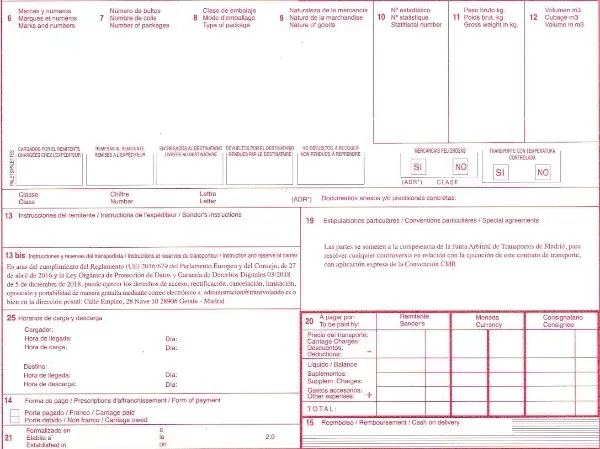
Cubing — the art of measuring cargo volume accurately — is the single biggest lever for cost control in European road freight. Two shipments weighing the same can cost completely different amounts based on how they cube out, and specialist transport projects live or die on whether cargo fits the available trailer envelope. This guide explains what cubing is, how to calculate it, why it matters for specialist cargo and how shippers can avoid surprise charges.
What is cubing in road freight?
Cubing is the calculation of cargo volume and its comparison against vehicle capacity. In European road freight it is expressed in cubic metres (m³) or as an equivalent volumetric weight in kg.
Two volumes matter on every shipment:
- Vehicle internal capacity (what your cargo has to fit inside)
- Cargo gross volume (length × width × height in metres)
A 13,6 m tautliner has ~90 m³ internal. A standard 20-foot container has ~33 m³. A mega-trailer with 3 m internal height has ~100 m³. Cubing tells you whether your cargo fits and how much you pay.
How to calculate cargo cube
The formula is simple:
Cargo volume (m³) = length (m) × width (m) × height (m)
For palletised freight, cube the individual pallets and sum them. A Euro pallet (1,2 × 0,8 m) stacked 1,2 m high = 1,152 m³ per pallet. 33 Euro pallets in a 13,6 m tautliner use about 38 m³ of the 90 m³ available.
Volumetric weight vs gross weight
Freight is priced on the higher of actual weight and volumetric weight. The European road-freight volumetric conversion is typically:
Volumetric weight (kg) = volume (m³) × 333 kg/m³
For low-density cargo (foam, empty packaging, furniture, some textiles) volumetric dominates and shippers pay more per kg of actual weight. For high-density cargo (metal, machinery, chemicals) gross weight dominates.
Cubing for specialist transport
On specialist cargo — machinery, wind-turbine components, industrial project freight — cubing is more than pricing. It drives vehicle selection and permit strategy:
- Height: standard bridges clear 4,0 m, tautliners are typically 4,0 m total height. Taller cargo triggers abnormal-load routing
- Width: beyond 2,55 m requires wide-load permits; beyond 3,5 m adds escort vehicles
- Length: beyond 20 m triggers route surveys
- Weight distribution: axle-load limits may be exceeded even when total weight is legal if cargo is unevenly distributed
Standard container cube references
- 20′ dry container: 33 m³ internal (5,9 × 2,35 × 2,39 m)
- 40′ dry container: 67 m³ internal (12 × 2,35 × 2,39 m)
- 40′ High Cube: 76 m³ internal (12 × 2,35 × 2,69 m)
- 45′ High Cube: 86 m³ internal (13,56 × 2,35 × 2,69 m)
- 13,6 m tautliner: ~90 m³ internal (13,6 × 2,48 × 2,68 m)
- Mega-trailer: ~100 m³ internal (13,6 × 2,48 × 3 m)
Practical cubing examples for specialist cargo
Wind-turbine nacelle
A 4-MW nacelle: ~10 × 4 × 4 m = 160 m³ but only ~110 tonnes. Impossible on a single trailer — requires modular platform with 10–12 axles, specific-authorisation permit and escort.
Industrial machinery
A CNC milling machine: 6 × 2,5 × 2,8 m = 42 m³, 25 tonnes. Fits one tautliner but exceeds height in some tautliners — mega-trailer needed. Single-vehicle transport, permit usually not required.
Pharmaceutical temperature-controlled pallets
20 palletised pharma units: 20 × 1,152 m³ = ~23 m³. Fits comfortably in a standard reefer (18 pallet floor positions, double-stack where cargo permits). Priced on pallet count, not pure volume.
Why cubing matters for your invoice
- Groupage (LTL): priced on chargeable weight (higher of volumetric and gross). A 500 kg consignment that cubes 2 m³ pays for 666 kg (= 2 × 333).
- FTL: priced on the full truck regardless of how full — but carrier revenue management may reject cargo that won’t fit
- Intermodal sea: container cube limits drive routing decisions and per-unit shipping cost
- Air freight: volumetric conversion is more aggressive (6.000 cm³/kg) — low-density cargo can cost 5× its gross-weight rate
Frequently asked questions
What’s the difference between cubing and volumetric weight?
Cubing is the actual cargo volume in m³. Volumetric weight is that volume expressed as a kg equivalent for pricing purposes. Road freight uses 333 kg/m³; air freight uses a denser 167 kg/m³ (6.000 cm³/kg).
Do irregular-shaped loads cube by actual or bounding-box dimensions?
Always bounding-box — the cargo occupies the full length × width × height envelope even if there is empty space inside. Carrier quotes use external dimensions.
Can I double-stack palletised cargo to reduce cube?
If the cargo permits (non-fragile, boxes rated for stacking), yes. Double-stacking 33 Euro pallets as 66 halves the floor requirement and usually unlocks mega-trailer or shared-FTL pricing.
What if my cargo exceeds standard trailer height?
Mega-trailers extend internal height to 3 m. Beyond that you need specialist lowboy or flatbed with abnormal-load permits.
Does cubing change across European borders?
The 333 kg/m³ road convention is near-universal across EU. Some carriers apply 250 kg/m³ on specific lanes (particularly air-linked groupage). Air freight and sea freight use their own volumetric conventions.
How do I reduce volumetric weight on my shipments?
Optimise packaging — remove void space, choose more efficient cartons, consider flat-pack options. Many shippers cut 15–25% of volumetric cost by redesigning packaging specifically for transport.
Looking for specialist freight with accurate cubing?
Transvolando quotes every specialist transport project from exact cargo dimensions, not just weight. Share your brief and we come back in 2 working hours with vehicle selection, permit strategy and a transparent quote.
Request a specialist freight quote
Need a Full Truckload (FTL) service?
At Transvolando we manage your freight with efficiency and reliability. Personalised quote in under 2 hours.
View serviceRequest a quote