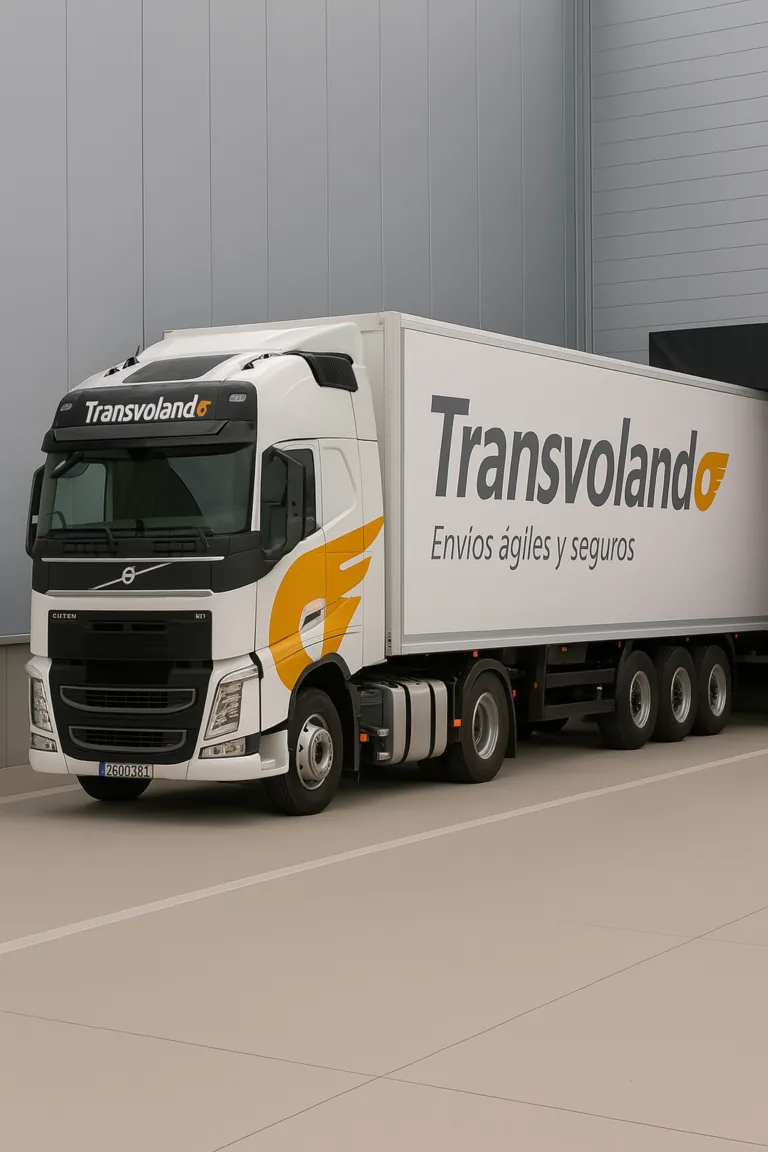
Consumer trends and their impact
The speed at which consumer expectations change directly impacts a company's transportation strategies. Flexibility in transportation becomes crucial to adapt to emerging trends and satisfy the demands of an increasingly informed and demanding clientele.The evolution of flexibility in road transport
In the past, efficiency in road transportation was measured primarily in terms of speed and costs. However, current trends reveal that flexibility is the key that unlocks the next level of customer satisfaction. Transvolando, as a leading transportation company, has recognized this paradigm shift and has adjusted its strategies accordingly.The role of flexibility in international transport
In international transportation, where the variables are even more diverse, flexibility becomes the foundation of excellence. Transvolando stands out by offering tailored solutions, adapting to changing regulations and geopolitical dynamics. This adaptive capacity ensures that international transportation is not only efficient but also resilient to uncertainties.Technological innovations and flexibility in transportation
Technology has emerged as a key catalyst for improving flexibility in road transport. Transvolando has implemented advanced fleet management systems and real-time tracking platforms, allowing an agile response to variations in demand and unforeseen operating conditions.The importance of collaboration in today's business environment
Flexibility in transportation is amplified through strategic collaborations. Transport companies, such as Transvolando, establish alliances with other entities in the supply chain to strengthen their response capacity. This collaborative network not only improves flexibility but also creates synergies that benefit all parties involved.Challenges and opportunities in national transportation in the face of consumer trends
In national transport, businesses face unique challenges stemming from consumer trends. The demand for fast delivery, traceability and personalized attention requires extreme flexibility. Transvolando has addressed these challenges by implementing agile processes and advanced technological systems.Conclusions: Navigating the waters of consumer expectations
In conclusion, flexibility in transportation is not just a strategy; It is a prevailing need in today's world. Transvolando, through its customer-centric approach and ability to adapt to consumer trends, demonstrates that flexibility not only improves operational efficiency but also builds strong customer relationships in the ever-changing road transportation landscape. In an environment where adaptability is the currency, flexibility in transportation is presented as the differentiating factor that drives the continued success of transportation companies.Solicita presupuesto de nuestro servicio de transporte de mercancías
In our company we successfully make numerous shipments every day, and our customers are completely grateful and satisfied with our team. If you need quality and seguridad to manage your company's shipments, Request a quote for our freight transportation service.We are waiting for you! Request your quote in less than 3 minutes at just one click.Frequently Asked Questions about Transport Flexibility
What is flexibility in transport and why is it key for B2B?
Flexibility = the agency's ability to adapt to client changes without excessive extra costs: 1) Change in delivery date/time <24h previo aviso. 2) Volumen variable (subir/bajar 30% sin penalización). 3) Cambio de ruta o destino post-recogida. 4) Tipo de servicio adaptable (cambiar grupaje a urgente). 5) Capacidad respuesta picos estacionales. Para B2B con demanda variable o estacional, flexibilidad vale más que tarifa baja con condiciones rígidas.
How do I negotiate flexibility clauses in my annual contract with the agency?
Specific clauses to agree: 1) Volume tolerance ±30% on annual estimate without penalty. 2) Delivery time changes up to 24h before without surcharge. 3) Flexible band for urgencies (5-10% annual volume at pre-agreed premium rate). 4) Reserved capacity in identified seasonal peaks. 5) Regulatory adaptation clause (Euro VII change, LEZ doesn’t affect rate). Flexibility cost: 5-10% over rigid standard rate. Clear ROI in B2B with variability.
What types of businesses need maximum flexibility in transport?
Five profiles where flexibility is critical: 1) B2B e-commerce (sharp seasonal peaks). 2) Single large client (unpredictable calendar changes). 3) Seasonal industry (harvest, toys, agriculture). 4) Construction (sites with unpredictable schedules). 5) Events business (highly variable logistics). For these profiles, an agency with own fleet (not 100% subcontracted) is the better option — faster response capacity.
How do I balance flexibility and competitive cost in my logistics contract?
80/20 Strategy: 1) Annual fixed rate for 80% predictable base volume (volume discount). 2) Variable premium rate for 20% emergencies and peaks (reserved capacity). 3) Bidirectional clause: if real volume is <90%, no pagas penalización; si es >130%, agency has 7 days to respond. This model maximizes volume discount without losing agility. Typical customer saves 15-20% on 100% rigid or 100% spot model.
What technology lets an agency offer greater operational flexibility?
Three enabling technologies: 1) Dynamic TMS with real-time re-routing (changes route to moving vehicle). 2) Dynamic load-vehicle matching platform (assigns closest vehicle). 3) Collaborative partner network (elastic outsourced capacity). Without these technologies, traditional agency has limited flexibility — it can only offer changes <48h previo aviso. Agencias digitales modernas pueden cambiar parámetros en horas. Pregunta a tu agencia qué tecnología usa.
Need full-truckload (FTL) haulage?
Dedicated lorry for your cargo, 2-hour collection and the same contact throughout.