Supply Chains
The COVID-19 pandemic that we experienced a few years ago highlighted the vulnerability of supply chains around the world. The interruption of the logistical operations affected businesses and highlighted the importance of building more resilient and flexible supply chains. In this post, we will explore how road freight transport plays a crucial role in building strong supply chains.Diversification of Routes and Suppliers
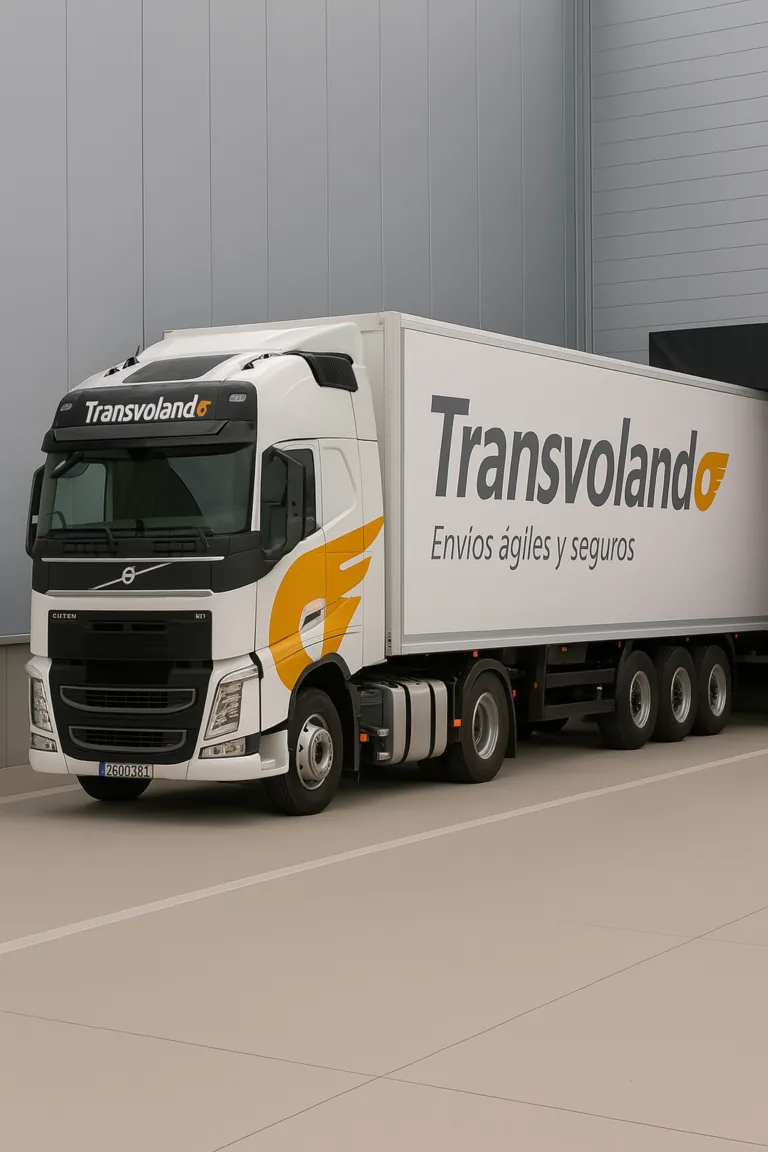
Transvolando is a transportation company that gives us an example of how the diversification of routes and suppliers is essential to reduce vulnerability to interruptions. The company has established a strong network of trusted transportation providers and alternative routes to ensure that goods reach their destination, even in adverse conditions.Using technology for supply chain visibility
As a transportation company, it is important to make investments in advanced technologies and tracking systems to ensure visibility of your supply chains in a timely manner. Companies like Transvolando have achieved this, which has allowed them to make informed decisions during interruptions and has been able to quickly adapt to market challenges.Collaboration and Effective Communication
A transport company must demonstrate the importance of close collaboration with its partners and associates in the supply chain, maintaining open lines of communication. This allows problems to be identified in advance and addressed before they become a crisis, thus ensuring a correct and constant flow of freight transport.More Robust Inventory Strategies
As a transportation company, you must also perform an analysis and evaluate inventory levels. Next, create a system for implementing decentralized storage strategies and flexible inventory policies. This has proven to be essential for maintaining adequate inventory and cushioning disruptions.Risk Assessment and Contingency Planning
A transportation company and its supply chain must be constantly evolving. Thus, it is possible to identify the risks that may affect the company and, as a result, develop strategies and contingency plans. This includes the identification of potential threats and the strategy to mitigate their impact on the supply chain. Transvolando is an inspiring example of how a road freight company can adapt, innovate, and build a strong supply chain. The company has demonstrated that collaboration, advanced technology and careful planning are key elements in meeting challenges and ensuring a successful operation. Their commitment to innovation and constant adaptation is a model for other companies in the industry to follow.Solicita presupuesto de nuestro servicio de transporte de mercancías
In our company we successfully make numerous shipments every day, and our customers are completely grateful and satisfied with our team. If you need quality and seguridad to manage your company's shipments, Request a quote for our freight transportation service.We are waiting for you! Request your quote in less than 3 minutes at just one click.Frequently Asked Questions about Supply Chains in Changing Times
What global disruptions are redefining supply chains 2024-2026?
Five megafactors: 1) Ukraine conflict (affects fuels, raw materials, Baltic route). 2) Red Sea tensions (Asia-Europe maritime routes). 3) Sustained inflation (fuel, labour, infrastructure). 4) EU environmental regulation (Euro VII, CBAM, CSRD). 5) Critical driver shortage (400,000 deficit in EU 2030). Resilient businesses: diversify suppliers, near-shoring, contingency plans, digital technology.
How do I assess my supply chain resilience and improve it?
3) Stock security (vs pure just-in-time — more cost but more resilience). <40>
What role does near-shoring (relocating suppliers nearby) play post-pandemic?
Strong near-shoring trend 2022-2026: 1) Spanish businesses relocate Asian suppliers to Morocco, Tunisia, Eastern Europe. 2) Benefits: shorter lead times (3-7 days vs 4-6 weeks from Asia), lower geopolitical risk, sustainability. 3) Relative cost: 5-15% more expensive than Asia but lower risk and stock. Leading near-shoring sectors: textile, automotive, basic electronics. ROI: 18-36 months versus risk of not relocating.
How do I manage inventory in a volatile demand environment?
Five modern techniques: 1) Dynamic stock per SKU by rotation (not fixed inventory). 2) AI forecasting (90% accuracy vs manual Excel 70%). 3) Postponement (keep generic product, customise on order). 4) Vendor Managed Inventory (VMI) — supplier manages stock. 5) Cross-docking without intermediate warehousing. Businesses adopting these cut stock 20-35% while maintaining service level. Free up working capital.
What strategy should I adopt for a future-proof supply chain by 2030?
Five strategic pillars: 1) End-to-end visibility with TMS+WMS+ERP integrated. 2) Supplier base diversification (3+ alternatives for critical SKUs). 3) CSRD-ready sustainability from 2025. 4) Full digitalisation (e-CMR, blockchain traceability). 5) Crisis response capability (contingency plan tested annually). Businesses investing now capture 5-10% margin advantage versus reactive ones.
Need express freight?
You need it now. We collect within 2 hours and update you at every stage.