Importance of packaging in transportation
The packaging not only protects the products during transport, but also ensures a positive experience for the customer by receiving their order in perfect condition. Correct protection of the interior of the packaging helps it reach the consumer in perfect condition. Thus, it helps to reduce the number of returns as well as reducing losses on the part of the company.Packaging functions
- Preserve the merchandise
- Reduces the possibility of wear or loss with correct identification
- Facilitates the manipulation of content in distribution and transportation
- If attractive packaging and labeling are used, it improves the image of the brand towards the customer.
Types of packaging materials
To ensure optimal protection, it is crucial to select the right packaging materials. Some of the most common include corrugated cardboard, polyethylene foam, kraft paper, bubble wrap, and stretch films.- Corrugated Cardboard: Corrugated cardboard is one of the most used materials due to its resistance and ability to absorb impacts. It is ideal for boxes and containers that require additional protection.
- Polyethylene Foam: The polyethylene foam is soft and lightweight, but provides excellent protection against shock and vibration. It is commonly used to wrap delicate or fragile products.
- Kraft Paper: Kraft paper is durable and biodegradable, making it a sustainable option for packaging. It is used to wrap products and fill empty spaces in boxes to prevent movement.
- Bubble Wrap: Bubble wrap is known for its cushioning and impact protection capabilities. It is used to wrap products individually or as a protective layer inside boxes.
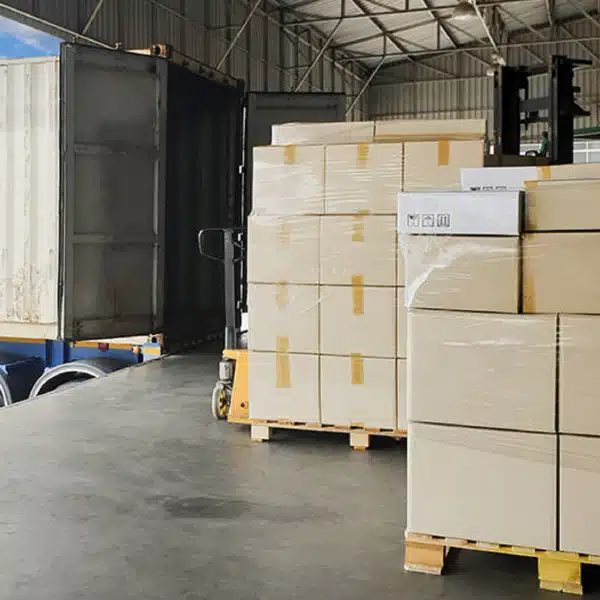
- Stretch Film (Film): Stretch film is ideal for wrapping pallets and keeping products in place during transportation. Provides stability and protection against handling and damage.
Solicita presupuesto de nuestro servicio de transporte de mercancías
However, our company makes numerous successful shipments every day, and our customers are completely grateful and satisfied with our team. If you need quality and seguridad to manage your company's shipments, Request a quote for our freight transportation service.We are waiting for you! Request your quote in less than 3 minutes at just one click.Frequently Asked Questions about Packaging in Transport
Why does good packaging reduce transport costs for my business?
Three direct impacts: 1) Cuts damage claims 60-80% (when it protects well). 2) Optimises vehicle cubage (tight, stackable boxes = 14-20% more capacity). 3) Speeds up hub handling (well-prepped pallet vs loose box = 50% less time). Optimised packaging cost: 2-5% of cargo value. Savings on claims + cubage + handling: 5-12% on total cost. Clear ROI.
What types of packaging exist and when do you use each?
Five standard B2B categories: 1) Double-wall cardboard box: resilient cargo, short/medium transport. 2) Wooden crate: heavy or fragile international cargo. 3) Pallet with corner protectors + film: any load above 50 kg. 4) Foam-fit packaging: high-value fragile cargo. 5) Shrink-wrap: multi-piece consolidated loads. Relative cost: double cardboard (1×), wood (3-4×), foam-fit (5-8×). Choose by cargo value and route.
How do I correctly label each parcel to avoid transport errors?
Minimum professional labelling: 1) Label with shipper VAT/details and full consignee data. 2) Parcel number (1 of N). 3) Gross weight and dimensions. 4) FRAGILE/THIS WAY UP marking if applicable (ISO 780). 5) Barcode or QR for digital traceability. 6) Storage info (temperature, humidity). Label visible on at least 4 sides of the parcel. Indelible water-resistant ink. Businesses with poor labelling suffer 3× more lost parcels.
What regulation governs non-EU international packaging (ISPM-15 wood)?
ISPM-15 (FAO) regulation: mandatory for wooden pallets and packaging in non-EU export. It requires: 1) Heat treatment (HT) or fumigation at 56°C/30 min. 2) International stamp with country code + certificate number. 3) Annual renewal if reusable. Without ISPM-15: destination customs hold cargo 3-7 days + €200-2,000 fines + possible rejection. For UK shipments post-Brexit, ISPM-15 is also mandatory. Your agency must verify compliance before export.
How do I reduce packaging while still protecting cargo (B2B sustainability)?
Five strategies: 1) Returnable closed-loop packaging with recurring client (EPAL pallet, foldable containers). 2) Recycled material (100% recycled cardboard keeps strength). 3) Eliminate overpacking (tight boxes, no voids). 4) Replace polystyrene with biodegradable starch or corrugated cardboard. 5) Optimise cubage to use fewer boxes. Result: -15-30% packaging volume, -8-15% cost, plus reportable CSRD CO2 saving.
Need part-load / groupage?
Your pallets ride with other consignments. Save the full-lorry cost without missing your delivery date.